


Image credit: Marcela Uliano da Silva/Wellcome Sanger Institute.
From invasive mussels to sloths, Dr Marcela Uliano da Silva at the Wellcome Sanger Institute shares her varied career journey, with a consistent focus on inclusive research and effective scientific communication.
Settled into our interview with a coffee in hand, sitting at a sun-drenched table outside the Institute’s café is Senior Bioinformatician Dr Marcela Uliano da Silva. During our interview, the summer heatwave in Cambridge almost makes us feel like we are in Marcela’s hometown, Florianópolis, in one of the southern states of Brazil.
Marcela speaks about how she fell into a computational career as a science student and discovered a passion for all things molluscs. More recently, she explains how she has led the collaborative effort to sequence the world’s slowest mammals. The latest study from this team has revealed new information about sloth biology and how they manage their metabolism highlighting how little we still know about mammals and their metabolic engines.
Marcela also discusses her commitment to ensuring South America is not left behind in the genomic revolution. Take a leaf out of the sloth playbook and hang around to find out more about this journey from Florianópolis to Cambridge.
Did you always know you were destined for a career in bioinformatics?
Not at all, it was quite accidental! I was studying biology at The Federal University of Santa Catarina in Florianópolis – an island in the very south of Brazil. During my first year, the professors went on strike over salaries, which happens sometimes in Brazil. It meant months without formal classes. In Brazil, we are encouraged to enter the lab environment very early, so I used that time to begin working in a laboratory and I fell in love with it immediately.
Eventually, I transitioned into ecotoxicology, a field that studies how toxic chemicals and pollutants impact ecosystems, populations, and individual organisms. Specifically, I was looking more at the biochemistry side for toxicity biomarkers in molluscs – soft-bodied invertebrates ranging from octopi to oysters. I eventually transitioned to studying the molecular biology side of mussels, and I think this set the stage for everything to follow.

Marcela visits a power plant in the state of Sao Paulo, Brazil. Golden mussels on the grid growing in clusters are visible.
Image credit: Marcela Uliano da Silva/Wellcome Sanger Institute
Following your undergraduate experience, how did you gain funding for your PhD project on mussels?
I had a scholarship, but no money to sequence the golden mussel (Limnoperna fortunei) to create a reference genome, that I would desperately need in order to study this invasive species. So, my supervisor and I deployed our communication skills to raise awareness about the golden mussel, and the negative impacts it has on the Brazil’s energy supply, to fund laboratory supplies and DNA sequencing. We used a crowdfunding campaign to do this, and I made an animated video explainer describing how genome sequencing works and it went viral at the time!
Crowdfunding campaign animation created by Marcela Uliano da Silva that aimed to raise funds to genome sequence the Golden Mussel.
These fundraising and communication efforts led to me being invited to apply for a TED Fellowship, which I was selected for. As part of this, I had to give a TED Fellow’s talk at TED Global in Rio de Janeiro. I was so young – and very nervous – but in the TED Talk ‘Sequencing genomes to save fresh waters’ I described my PhD research on the golden mussel and why studying this invasive species is so important. These mussels grow to such high density that they clog the pipelines of hydroelectric power plants – systems used to collected kinetic energy from falling or flowing water. In a country like Brazil, which relies so heavily on water for energy, this is an economic and ecological disaster.
Giving a TED talk as a PhD student, was terrifying. But the outcome of going through that scary experience was very meaningful.
As a speaker at a TED Global event, you become a TED Fellow for life – which is an amazing community to be a part of, as you gain access to mentorship, visibility, and built-in TED support systems.
This experience taught me that in science communication, you must think on your feet and communicate to so many different types of people. You must be very clear to win funding – which is a lifelong lesson for any scientist!
Years later a golden mussel complete reference genome was produced through a partnership with the Sanger Institute in 2017, and I co-supervised the PhD student working with it – which felt like a very full circle moment.
Marcela was invited to become a TED Fellow and speak about her research at a live TED event in Brazil.
How did you end up working on sloths?
After my PhD, I won a Marie Curie Individual Fellowship and moved to Berlin to look at the genome evolution of sloths. I headed to the Leibniz Institute for Zoo and Wildlife Research (IZW) to work with Dr Camila Mazzoni. We were studying the genomes of two-toed sloths that were once hosted at the Berlin Zoo.

Two photos showing Marcela with sloths in the Berlin zoo.
Image credit: Marcela Uliano da Silva / Wellcome Sanger Institute.
Sloths are part of the Xenarthra, you can think of them as South America's signature mammals, much like kangaroos are iconic of Australia. They are notoriously difficult to study in the wild because they live deep in the jungle, so the zoo specimen was vital for high-quality DNA.
While in Berlin, I joined the Vertebrate Genomes Project (VGP) – which has the goal to generate high-quality reference genomes of all 70,000 extant vertebrate species. Through those VGP calls, I met Sanger researcher Dr Shane McCarthy, Head of Genome Analysis, who eventually encouraged me to apply for a role here at the Institute.
You have been in Cambridge for a few years now. Do you miss island life?
I think that everyone that has lived in many countries is bound to miss and call all these multiple places home. I love Cambridge. It is one of my favourite places in the world because it’s small enough to cycle everywhere and the studious population makes for a constant turnover of ideas and social opportunities. Alongside my role at the Sanger Institute, I am a Fellow at Churchill College.
Churchill is one of the places I found my home away from home outside of work. You sit down with a glass of wine and find yourself discussing big ideas with a philosopher or a political scientist.
“I love Cambridge. It is one of my favourite places in the world because it’s small enough to cycle everywhere and the studious population makes for a constant turnover of ideas and social opportunities.”
Dr Marcela Uliano da Silva,
Senior Bioinformatician, Wellcome Sanger Institute
Recently, our group hosted a Sanger Prize winner from Brazil named Beatriz Rodrigues Estevam, and not only is she returning to the Sanger Institute to do a PhD, but she’s also been accepted into Churchill College. So, although Brazil is very far away, I still manage to find a way to keep in touch with people from back home.
Outside of work, I am into weightlifting, yoga, and politics. If I were not a biologist, I think I would have been a political scientist. I cannot stop thinking about how science and society intersect, ask my friends, they will confirm it.
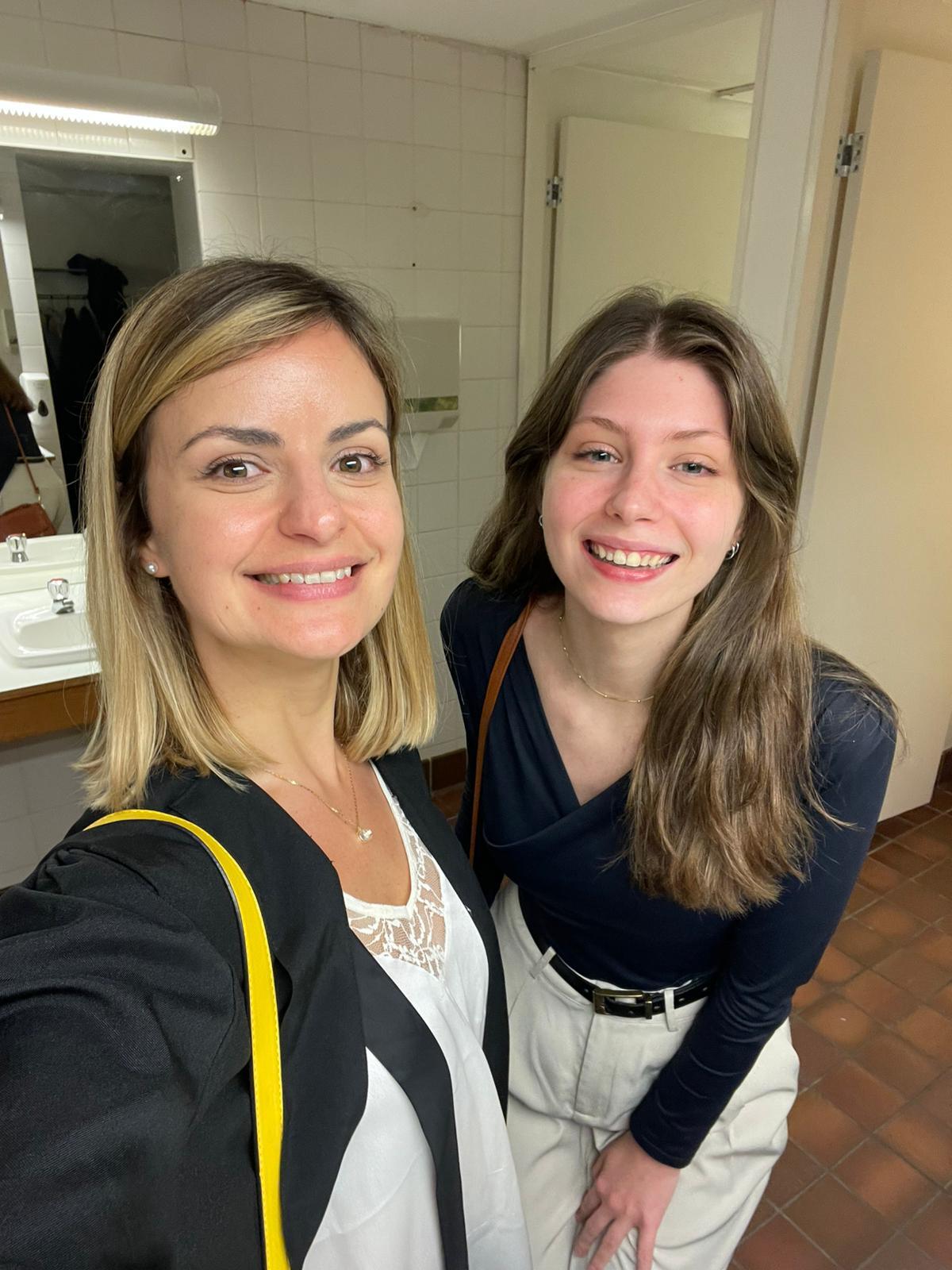
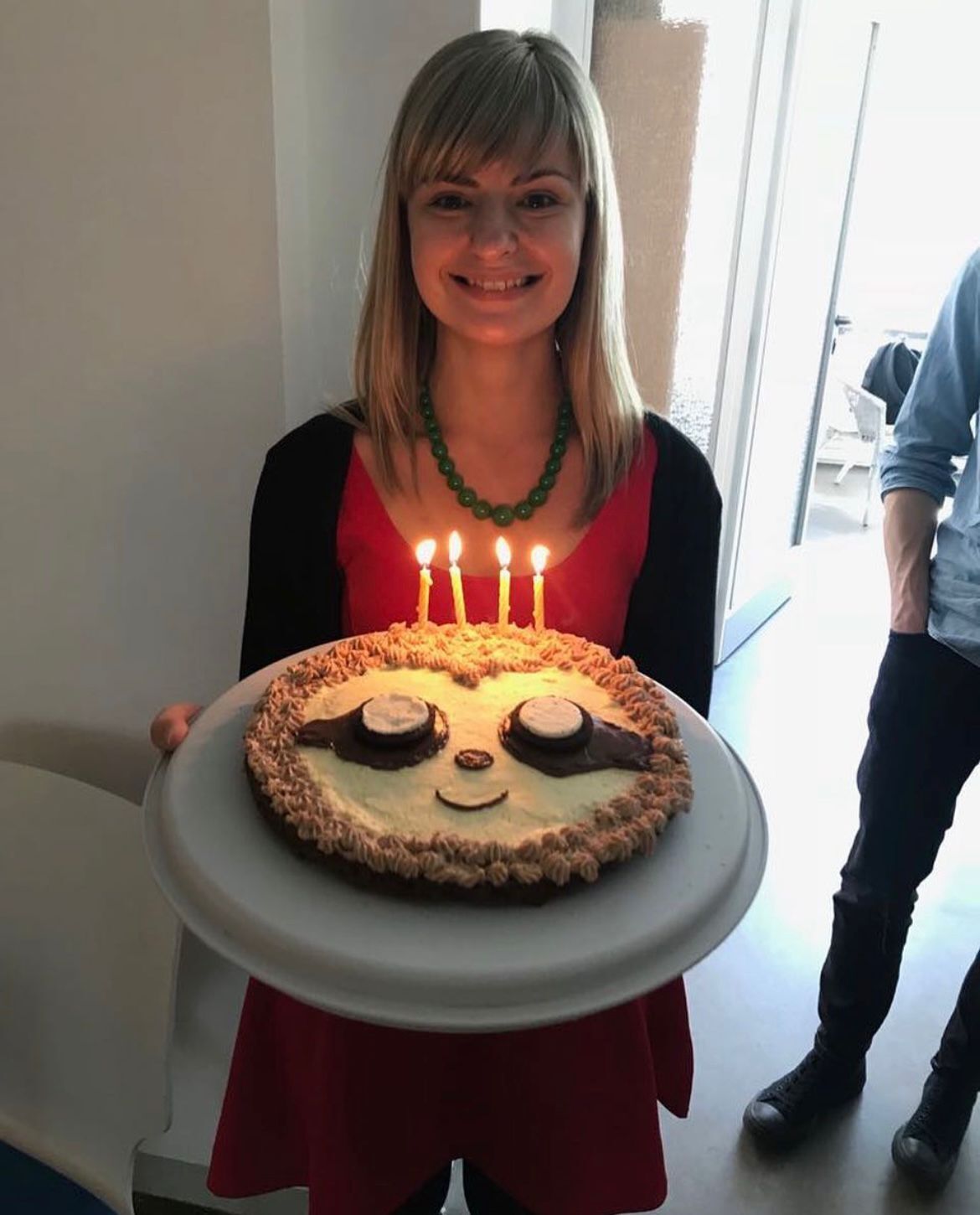
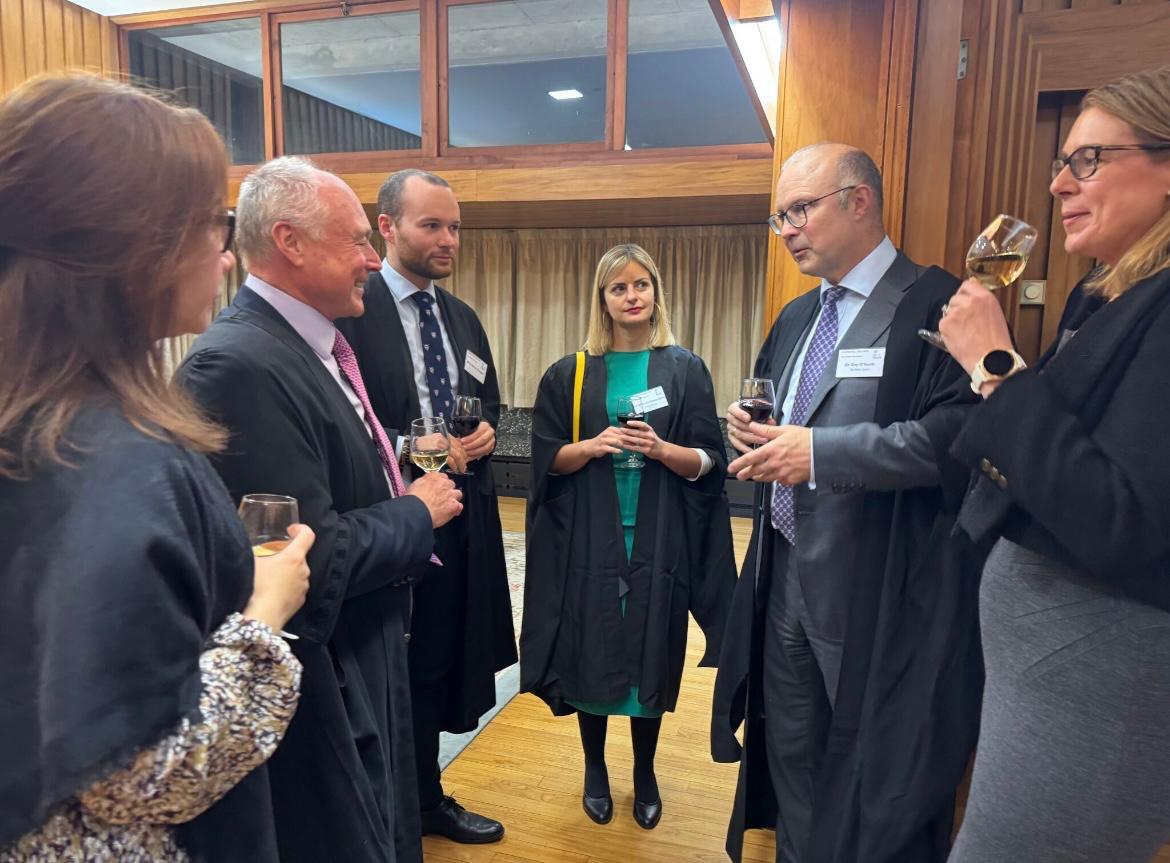
Images supplied by Marcela Uliano da Silva of life as part of Churchill College, University of Cambridge.
You are involved in the Earth BioGenome Project’s (EBP) JEDI committee. Are you training to use ‘the Force’?
I am sadly not a Jedi in training, although I would not mind wielding a light sabre. I am a co-chair of the EBP’s Justice, Equity, Diversity, and Inclusion (JEDI) committee. This is something that is really important to me alongside the research.
The Global South holds most of the world's biodiversity, yet it has the least infrastructure and research funding. Through being involved with the JEDI committee, among other things, I work to help address trust issues and helicopter science – which is the practice of taking samples to the Global North for sequencing without truly involving or crediting local scientists.
I’m currently co-leading a white paper that maps the challenges of global DNA sequencing. My goal isn't just to see more samples from Brazil arrive at the Sanger Institute; the aim is to foster infrastructure in South America. We need to organise training and ensure that science is accessible. We shouldn't expect every brilliant student in the Global South to leave their family and country to access the training they need to carry out this type of research.

Left to Right: Dr Ann McCartney, Dr Marcela Uliano da Silva, Dr Sadye Paez, Professor Ntanganedzeni (Olivia) Mapholi, all members of the JEDI EBP, at a conference in 2023 where the first JEDI workshop was held.
Image credit: Marcela Uliano da Silva/Wellcome Sanger Institute
With a career stretching from the sunny shores of southernmost Brazil to the computational pipelines of Cambridge, wherever Marcela goes, and whatever species she turns to, she makes a huge impact. Whether putting the spotlight on genomics research, teaching, mentoring or using communication to bring new information to more people, Marcela doesn’t hang around. She brings the stories hidden in DNA code slowly but surely into the light.


