


Image credit: Xiaotian Liao.
At the Wellcome Sanger Institute, Xiaotian Liao navigates a world of protein puzzles, global experiences and furry friends, blending curiosity and computation into a journey that stretches far beyond the lab.
Mornings begin with an open laptop and a universe of protein sequences with secrets to reveal. Afternoons stretch into conversations, ideas and training. Somewhere in between, are moments of wondering through trees or curling up with cats. This is a typical day for PhD student, Xiaotian Liao.
Their path to Cambridge has been far from conventional – spanning many countries and shaped by a personal drive to make an impact. Xiaotian walks us through a day in their life, where computation and quiet moments come together to shape both their research and journey.
What does a typical day look like for you as a PhD student at Sanger?
I'm a third-year PhD student, supervised by Head of Generative Genomics, Professor Ben Lehner – whose group I’m part of – and Group Leader in Somatic Genomics, Dr Jyoti Nangalia – who has been an important mentor for me in my development as a researcher and a consistent source of support throughout my PhD.
RELATED SANGER BLOG
Understand, predict, engineer
Professor Ben Lehner, Head of the Generative Genomics programme at the Sanger Institute, seeks to predict how a protein produced by a gene behaves in the real world – based on knowing its DNA sequence alone. He and his team are generating the data, building the mathematical models that will enable the next generation of drug discovery and bioengineering.

Because my work is largely computational, I usually spend my mornings trying to get the challenging parts of my PhD done because that's when I'm most focussed. Then, I spend my afternoons in meetings or catching up with people in the lab. The exciting thing about computational work is that it never really stops. You can take it with you anywhere – open your laptop, follow an idea and test a hypothesis in real time.
Beyond research, there are also activities and training opportunities for my PhD cohort. We recently did leadership training and I really liked it. Scientists often get very little leadership training, particularly early in their careers, so it has been really useful and has encouraged me to step out of my role as a student and think about my future. It was quite empowering and really changes the way you interact with your peers and your supervisor, as well as how you communicate your science.
What is your background in?
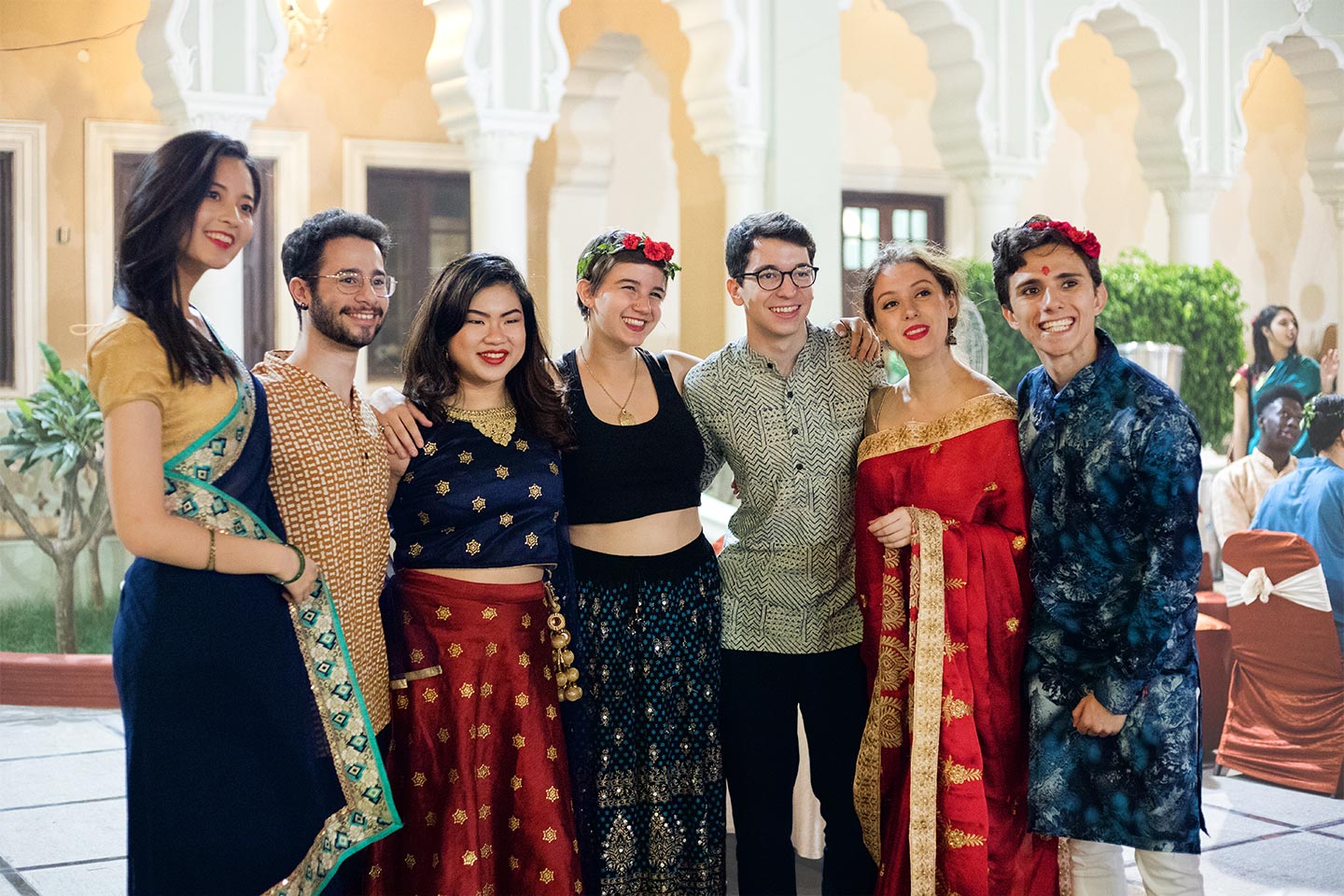
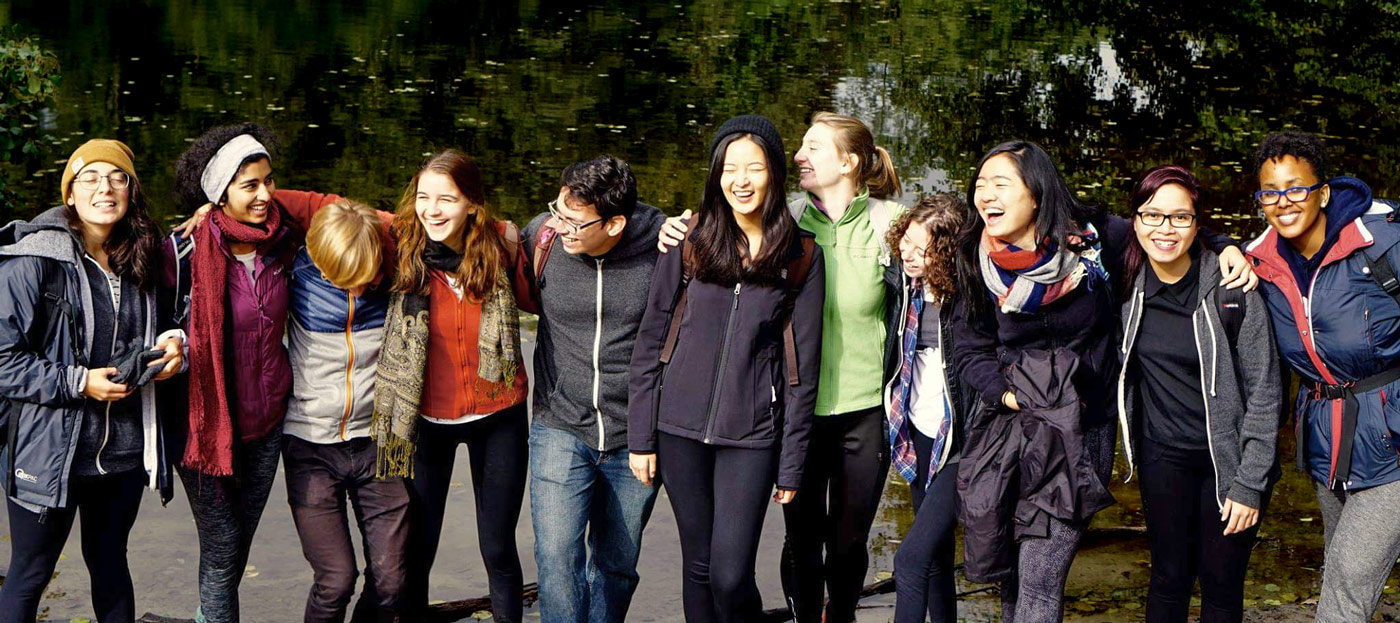
I come from a fairly unconventional, global liberal arts college – Minerva University – where over four years, we lived and studied together across six different countries: San Francisco in the United States, Germany, Argentina, the UK, Korea and India.
Depending on the location, our school would find us a residential apartment and we would work with local researchers and labs. I really enjoyed exploring a range of research experiences across the world and seeing how cultures vary and how research is approached in different places. I ended up majoring in Natural Sciences and Computational Sciences.
It was a bit challenging at first, because it takes time to build a community in each new city and form friendships – and just as you start to settle in, it’s time to pack up and move again. What really helped was how close and supportive the student cohort was.
What made you choose this career path?
I've always been interested in biology. The motivation in the beginning was more driven by the desire to understand how things worked and understand how I could help people. When I was in middle school, my father was diagnosed with a rare type of blood cancer, myeloproliferative neoplasms (MPNs), a condition where cells grow too quickly, and my mum was diagnosed with breast cancer. Luckily, they're doing well these days, but as a kid, I felt really powerless. That experience made me want to see if one day, I could make a difference.
Since middle school, I knew I wanted to do something science related, but I think that plan has evolved gradually as I have gone through my education. I originally wanted to become a physician, because that is how I saw myself potentially helping people like my parents. That led me to move to Boston for three years after I graduated from college. I did an internship at Harvard Stem Cell Institute when I was in college, and I got to work on the condition that my father was diagnosed with, so that felt really meaningful. So, I went back to the same lab to work as a research assistant for a bit. It felt like a full circle moment to me. At that lab, I learned a lot of experimental and computational techniques and got to work on an independent research project.
During that process, I realised I didn’t see myself becoming a physician, because I got to shadow some physician scientists that worked in the lab, and I saw what their day to day was like. I realised it was not what I imagined. The unfortunate reality is that there is only a limited repertoire of treatments that physicians can prescribe to patients, and a lot of the time, there's no treatment or cure available. I didn’t feel like this was something I could do long term as I would want to find a solution – this is why I thought a research career would be better for me.
How did you end up here at Sanger?
In Boston, as I mentioned, I studied the blood cancer that my father had, MPNs, which can increase the risk of serious problems like blood clots or strokes. We found that some people inherit changes in their DNA that make their stem cells divide faster, which gives more opportunities for things to go wrong over time. Interestingly, Jyoti actually researches and treats individuals with MPNs – so it feels like there is this common thread across my life.
RELATED SANGER BLOG
From bench to bedside – Innovating blood cancer clinical practice
Jyoti Nangalia is a Group leader at the Sanger Institute and a haematologist at the Cambridge University Hospitals NHS Trust, who is at the forefront of innovation in blood cancers. Her research combines her clinical, academic and genomic expertise to advance our understanding of blood cancers, from diagnosis to predicting patient outcomes and improving clinical management.

While I enjoyed it, that experience made me realise I wanted to work on bigger, more general problems rather than focussing on one disease at a time – especially around the time AlphaFold came out, which felt like a real turning point. It inspired me to join Ben’s lab and work on questions that could apply more broadly across many diseases.
I've been a secret fan of Ben for a long time – I like his style of research questions and knew his team would be the perfect fit for me.
What is your PhD project about?
It’s a really exciting time to be a biologist. We can now write DNA with CRISPR and read it at scale with sequencing, but the challenge is understanding what all those sequences actually do. Ben’s lab focusses on this fundamental question: how does sequence map to function? Function can mean many things – protein stability, expression or activity.
My PhD focusses on protein allostery, which is a way proteins can be regulated at a distance. Think of a protein like a light bulb: it might not work because it’s unstable, because the active site is broken or because something far away affects its function – that last scenario is allostery. To study this, our lab measures both protein stability and activity for every mutation, which lets us separate true allosteric effects from simple instability.
For my work, I’ve developed a computational framework that can do this kind of analysis on a massive scale. It can use experimental data from our lab or others, or predictive models that estimate protein stability and activity. Using this approach, we can scale from the few dozen proteins studied experimentally to thousands across the human proteome. That allows us to ask fundamental questions that were impossible before: How many human proteins are actually allosteric? How does allostery vary across protein classes or evolve within protein families?
Most of my work is computational, using programming languages like R and Python to analyse data and make statistical inferences. Ultimately, we hope to improve these models by integrating them with experimental data, making them more accurate and allowing us to predict protein behaviour in ways that could guide both basic biology and future therapeutic design.
Where do you see this work heading?
In the immediate term, I see this work laying the foundation for how we analyse protein allostery at scale. Until now, most studies have focussed on one protein or a few related proteins at a time, which makes it hard to compare results across different systems. With computational predictions across thousands of proteins, we now have a common reference frame, allowing us to develop frameworks to study fundamental properties of allostery systematically. This framework can eventually be applied to experimental data as it becomes more abundant, making it easier for the field to scale up analyses and ask big questions.
In the longer term, I hope this work will help reveal the basic rules of allostery: how it varies across protein classes, where allosteric sites are located and how proteins are regulated at a distance. This has clear implications for drug development. Allosteric drugs tend to be more specific and tuneable than those targeting the active site which can be associated with more unwanted side effects. Mapping allosteric sites systematically opens the door to targeting proteins previously considered undruggable or proteins linked to rare diseases that currently lack therapeutic options. Ultimately, I see this work guiding both fundamental biology and the development of new, more precise therapies.
RELATED SANGER BLOG
AI and genomics pave the way to new data-driven scientific discoveries
Artificial intelligence (AI) is reshaping how we analyse biological data – from predicting protein structures to uncovering insights from vast genomic datasets. Ronnie Crawford,'s work covers predicting protein stability from sequence data and building communities around AI‑driven research. From a reluctant programmer to an AI innovator, Ronnie’s path shows how career flexibility can lead to new opportunities in computational biology.

What has been your favourite thing about working at Sanger?
This PhD has taught me a lot about myself. I’ve realised that the two most important factors for me are the people you work with and the work itself. I really enjoy the research I’m doing, and I feel lucky to be in such a supportive lab. Even though everyone is working on different projects, it’s easy to share questions, get feedback and have meaningful discussions.
I’ve also learned how important it is for me to have access to nature. I love being at Sanger for that – whenever I get stuck or can’t fix my code, a walk outside helps me clear my head and come back feeling refreshed.
I genuinely enjoy my life here. It feels peaceful, and for the first time in my life, I’ve been able to stay somewhere long enough to make a home. I have my own place in Cambridge, filled with houseplants and two cats – Luna and Tee – who seem to enjoy nature just as much as I do! I have been enjoying planting catmint in my garden; I think there's something therapeutic about the process of digging and plotting something into the ground.


Cambridge cat life. Xiaotian with Tee (left), and Luna together (right). Image credits: Xiaotian Liao.
What book, film, show or podcast has inspired you recently?
When I was in high school, I took this literature class, and my teacher at the time really liked Virginia Woolf, so he highly recommended a lot of her books. I think I was a little bit too young to be able to appreciate her writing at the time, but now, after I started my PhD and moved to Cambridge, I think her writing resonated a lot more with me as compared to before. My favourite one is A Room of One’s Own – I highly recommend it.


