


Dr Gosia Trynka is a Group Leader at the Wellcome Sanger Institute and Science Director at Open Targets. She takes us on a journey from climbing trees in southern Poland to leading cutting-edge research in immune genomics, exploring the opportunities that shaped her path along the way.
It is 1980s Kraków, Poland, where communism shapes the rhythm of everyday life. Queuing in shops with ration cards is routine, and community is essential.
Meanwhile, in a 36-square metre apartment, sits a three-square metre kitchen which is the centre of everything for Gosia Trynka. It is not just where food is made, but where her family comes together.
“Our favourite room was the kitchen. We would all pile into it – I would sit on the sink, someone else on the counter, another on the floor. We would share stories.”
While communism brought its challenges, Gosia and her siblings made the most of it. She fondly remembers queuing for sugar with her oldest brother in the summer, the two of them playing as they waited, turning an everyday necessity into a shared moment of childhood warmth.
But things were not always as orderly as queuing for sugar growing up with brothers. Gosia and I laugh as we recognise the shared experience of having older siblings.
“Growing up with two older brothers is good fun – definitely a life lesson. Once I was playfighting with my brother and he flipped me over his shoulder, ran down from the fifth to the second floor of the block of flats we lived in, left me there, and then ran back up and locked the flat door.”
When Gosia was not tagging along with her brothers and their friends, she would spend time with her grandmothers while her parents worked. It was during these moments that she was filled with stories from their lives. From her paternal grandmother, who was 16 when World War II started in Poland, she learned resilience and courage. I see her eyes light up with pride as she describes how fearless her grandmother was, actively helping people get off trains heading to Auschwitz and helping to get her brothers out of workcamps. These stories of perseverance and of finding courage when things are difficult have deeply inspired Gosia.
"Life is difficult, and there are always challenges. But I often think of my grandma, who reminds me how lucky I am, even when I’m dealing with day-to-day struggles or challenges in science."


Gosia and her maternal grandmother (left) and paternal grandmother (right). Image credit: Gosia Trynka
On the maternal side, her other grandmother was only six years old when the war started but was one of Gosia’s primary carers from when she was little to a teenager. Gosia fondly recalls how she would always encourage her to try different things.
“She would tell us to make the most of the opportunities available to us as you never know what you’re going to make out of life, so you have to find out what you like and don’t like. She was very open-minded like that. She was also obsessed with us doing ballroom dancing – she was like, ‘Every human needs to know how to dance properly’. I wanted to do air rifle shooting and karate – so the compromise was me doing all of them.”
The values passed down from her grandmothers have shaped Gosia’s life and career as a scientist, leaving a massive imprint on who she is and a sense of curiosity that followed her from school onward – as well as a hint of cha-cha in her step.
Gosia admits that at high school she would skip lessons – no, not to mess around – but to understand more about different types of Polish poetry from her friend. In exchange, she would help her friend with molecular biology.
“I felt like biology came quite easily to me, and I also really enjoyed literature. I remember my physics teacher didn’t think I would do well at university because I wasn’t always showing up to lessons. But I was spending my time on things that genuinely interested me – and I think that’s where university really worked for me; it captured my imagination.”
Gosia went on to study at The Jagiellonian University in Kraków – one of the oldest universities in Europe. Although she never thought about it before, she ended up doing a master’s in a relatively new course called Biotechnology, Biophysics and Biochemistry. During her master’s, she did rotations in different labs – beginning with an immunology lab doing mouse work, which she admits she did not enjoy (remember this for later). After this, she did a year on plant biology looking at gene expression regulation in response to different light and receptors.
In her final year, Gosia was looking for more summer internships and ended up landing a role in Dr Cisca Wijmenga’s lab at the University of Groningen in the Netherlands, working on the genetics of coeliac disease – a chronic autoimmune condition where the body reacts to gluten.
“You never know how your life is going to end up. Once I left for that internship in the summer, the summer turned into a year and then, I never went back to live in Poland again. Cisca transformed my life. She is one of my scientific inspirations.”
Cisca went on to offer Gosia a PhD position, meaning she went from a “plant person” to working on the genetics of complex traits.
“This was the very early days of genome wide association studies (GWAS) – it was really fascinating, and I started to absorb the language. I was really curious to learn more.”
And more is certainly what she got. As part of her PhD, Gosia was mapping the genetics of immune diseases with a very strong focus on coeliac disease. Through this she ended up working on one of the biggest GWAS analyses for coeliac disease to date.1,2
“It was a great time. You felt the whole community got this tool that suddenly started pointing us towards these little signposts in the genome that were increasing the risk of developing disease. I became really interested in immune diseases and that has stayed up until now.”
Gosia could not have imagined from that first lab rotation at university that she would have come full circle back to immunology.
From that PhD, she then moved to Boston, Massachusetts, in the United States, and did her postdoc at the Broad Brigham and Women’s Hospital, Harvard Medical School and the Broad Institute.
“When I finished my PhD, we were mapping disease-associated variants – genetic changes in DNA that are linked to an increased risk of specific disease. We knew there were regions in the genome that increased risk, but we had very little idea what they were actually doing. At the time, there weren’t really systematic ways of following up on those associations – we were still asking basic questions like which cell types they acted in. I was very driven by the need to understand what was happening at the molecular level.”

Gosia's PhD viva, with Gosia at center, alongside her mentor and supervisor Cisca (in hat).
Gosia joined the groups of Dr Soumya Raychaudhuri and Dr Robert Plenge in Boston. In her postdoctoral work with Soumya, she helped develop systematic approaches to interpret disease-associated genetic variants. She did this by integrating them with large-scale regulatory maps – datasets showing how genome regions control gene activity – with consortia such as ENCODE and the Roadmap Epigenomics Project, international collaborations that generate and share genomic data. This work revealed cell type-specific signals, particularly implicating CD4 T cells – immune cells that regulate immune response – in immune disease. Alongside this, her work with Robert helped shape a parallel focus on how genetic insights could be translated into drug discovery, linking mechanistic understanding of disease biology with therapeutic development.
“Halfway through my postdoc, Robert closed his lab and joined a pharmaceutical company. I think the insights I learned from the drug related aspect of his work are now coming through into my work with Open Targets. Now, in hindsight, I can see how these moments in my life all are coming together.”
A year into her postdoc, Gosia was at a conference and heard that the Sanger Institute was going through a big recruitment phase. Although she was not yet thinking about establishing her own group, she remembered the lessons from her grandmothers.
“I saw it was going to be a big recruitment drive and thought I will never get this opportunity again – it is now or never. I lose nothing if I apply and I don’t get it, and if I do, I get to be part of this incredible environment. I thought why not? I am going to listen to some of the voices telling me to apply – so I did, and I landed the job.”
After spending time working and travelling across the world, Gosia was looking forward to moving closer to home. When she speaks about this period of her career, she does so fondly, reflecting on the value of experiencing different cultures and different approaches to answering fundamentally the same research questions.
“Up until now, I’ve always lived in cities and now I live in a village near the Wellcome Genome Campus, and I would never go back. I love the English countryside, where I love to go on walks with my dog.”
This is great news for us as Gosia heads a research group at the Institute. Her group is focussed on using different approaches to understand the role of genetic variants in regulating immune system function, and how their dysfunction can lead to disease. The team also then uses this information to think about therapeutic intervention, which aligns closely with Gosia’s role as Science Director at Open Targets – a public-private partnership that uses human genetics and genomic data to identify and prioritise potential drug targets.
“Open Targets and the work in my team have exactly the same mission – and that is understanding how common complex genetics impacts human health. Before I joined Open Targets, my team was already working quite closely with them and when the opportunity came up to be Experimental Science Director, I thought, I would really like to be closer to this and help drive it. A few years ago, I then became Science Director and so now, I think more broadly about the scientific direction of the organisation. It is a natural fit, and it helps us to think more about how genetics can accelerate drug discovery. It is the benefit of hindsight again because I couldn’t see this coming despite already working with them.”
Gosia flags some exciting research they have coming out of Open Targets, including work looking at what the breadth of genetic effects across diseases can tell us about potential drug targets and their safety, and another study asking whether human genetics can help predict how changing the activity of a gene might translate into the dose and direction of a treatment. Although some of these papers are still in preprint, she notes that these projects illustrate the growing potential of human genetics to guide drug discovery.
Alongside this, one of Gosia’s key pieces of research is Project Jaguar – a collaboration across seven different Latin American countries, which she leads with Dr Alejandra Medina-Rivera from the Universidad Nacional Autónoma de México. The aim of this project is to address the underrepresentation of Latin America in functional genomics resources. The team aims to build a cohort of 1,000 individuals across Argentina, Brazil, Chile, Colombia, Mexico, Peru and Uruguay to have a reference map for healthy individuals. This will then allow them to compare these findings with disease cohorts, with increased confidence that ancestry-related variation has been appropriately accounted for.
“It is such a wonderful collaboration. When you look at functional genomics resources, the majority include European populations. Latin America, despite being a huge region, is largely underrepresented. We wanted to address that. The team is currently finishing sample collection and actively analysing data. This is just the first step really – once we have this healthy reference, we can start to compare with patient populations and gain more meaningful insights.”
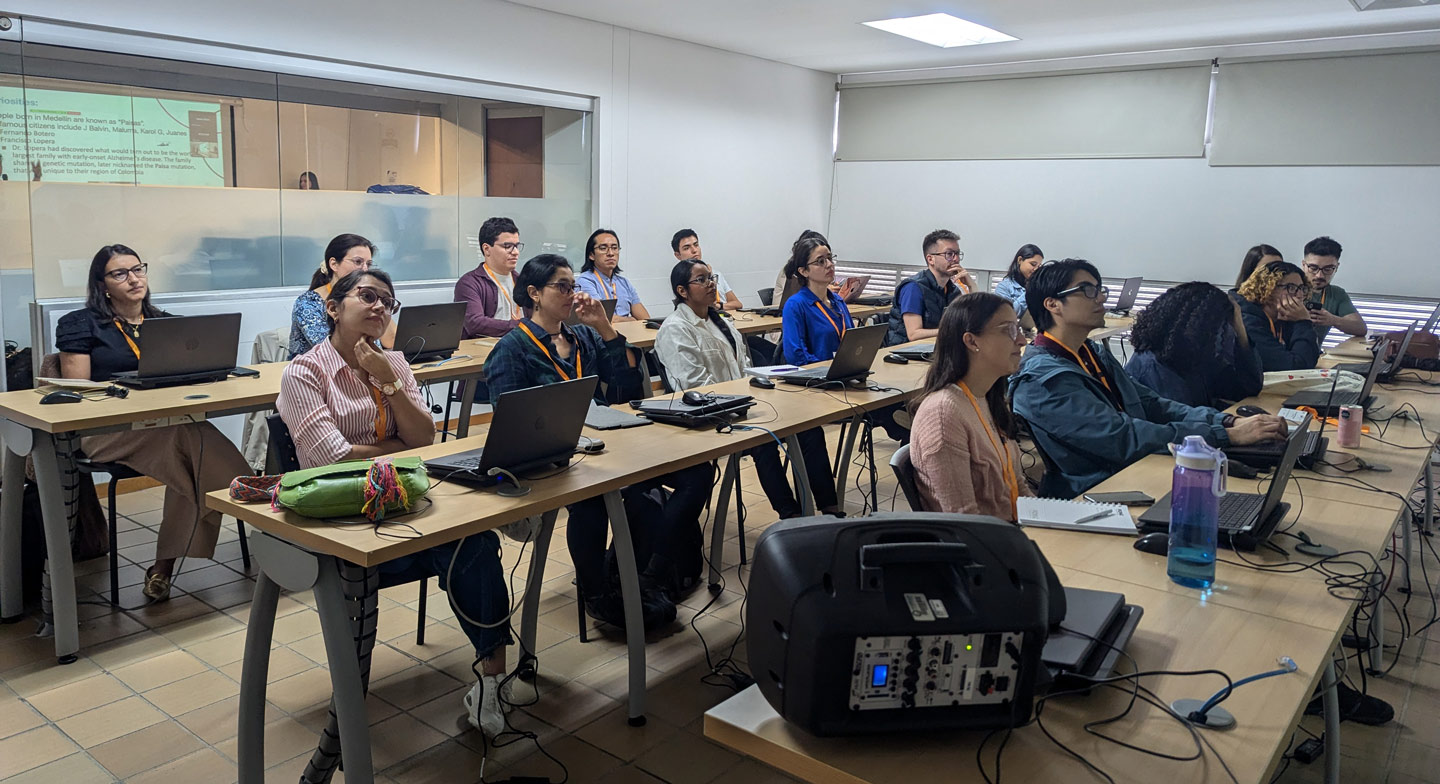
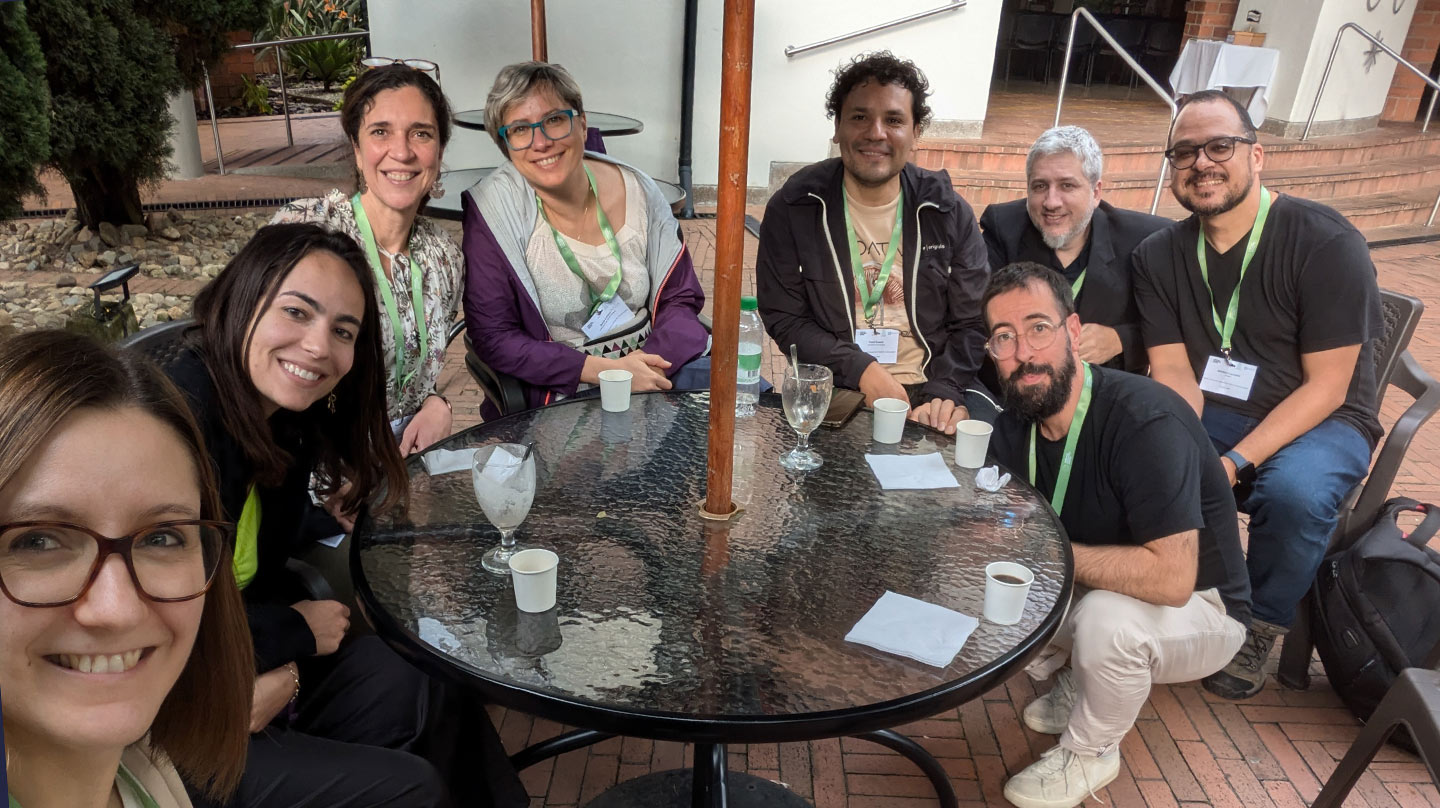

Project Jaguar's 'Single Cell Genomic Approaches to Study the Immune System' workshop held in Medellín, Colombia, organised by the JAGUAR analyst team. Image credit: Project Jaguar
Another piece of work Gosia is most excited about right now is TGlow, a new platform her team has developed to profile the morphology of lymphocytes at high throughput. The image-based approach complements their gene-expression work, allowing the team to see another dimension of how T cells respond to activation and dysfunction.
“The T cells produce some beautiful images, allowing us to see the remarkable variation between individual cells.”

image (38)
An image from Tglow of beautiful T-cell. Image Credit: Julie Matte/Wellcome Sanger Institute
While I believe Gosia is clearly excited about all of this work, both of us were arguably most animated when talking about her black Labrador, Blipper. He is not an ordinary food-obsessed Labrador, but a working dog whom Gosia regularly trains for competitions.
“I had little idea of what I was getting myself into when getting a working Labrador, but I absolutely love training him. We recently took part in a competition, and he had to follow precise commands to retrieve dummies across land and water. We came fifth place. He’s such a good boy!”


Gosia works with labrador Blipper during a working dog competition.
Whether it was on the ballroom dance floor as a child or out now in the field with Blipper, Gosia clearly has a knack for precision, timing and teamwork – just with very different partners. Interestingly, she admits that she has never planned her life in detail, instead choosing to stay open to opportunities and try different things.
“My advice to young, aspiring scientists is to seek out opportunities and push yourself beyond your comfort zone. I’ve moved from immunology to plant science, to human genetics, and back to immunology. It’s part curiosity, part openness and part making the most of unexpected opportunities. In science, luck plays a role – but if you stay open minded, you can broaden your horizons and keep learning, inadvertently increasing your chances of finding it.”
Gosia has certainly convinced me to broaden my horizons – but not as you may think – instead convincing me to read more than one book at once. From The Infinity Machine: Demis Hassabis, DeepMind and the Quest for Superintelligence by Sebastian Mallaby to Remarkably Bright Creatures by Olivia Newman, Gosia always has her head stuck in a book. One of her favourites from this year is Educated by Tara Westover.
“Literature has also been a sweet spot for me. I love books and I love reading. I am actually dyslexic so the two don’t usually go hand in hand. It is rather inconvenient as a scientist because there is so much text you need to process, including writing papers. This is why people need to be mindful that their fonts are accessible. Kindles can be really helpful for reading but if I really like a book, I will buy a paper version too. I’ve got a lovely little library at home.”
All this talk of hindsight has made me reflect on Gosia’s story – one shaped by the values learned from her grandmothers, deepened by a love of reading, reinforced by the guidance of her mentors, and enriched by the insights gained through her own scientific work. In many ways, stories are the thread that run through it all – I certainly enjoyed this one, and I look forward to seeing how her story continues to unfold.
Find out more
References
- Dubois PC, Trynka G, Franke L, et al. Multiple common variants for celiac disease influencing immune gene expression. Nature genetics. 2010; 42: 295‒ DOI: 10.1038/ng.543
- Trynka G, Hunt KA, Bockett NA, et al. Dense genotyping identifies and localizes multiple common and rare variant association signals in celiac disease. Nature genetics. 2011; 43: 1193‒ DOI: 10.1038/ng.998


