


Image credit: Wellcome Sanger Institute.
Switching careers, solving puzzles and moving across the world, Dr Marissa Knoll, Postdoctoral Fellow at the Wellcome Sanger Institute, reflects on her journey from New York City to Cambridge.
Sitting within the Respiratory Virus and Microbiome Initiative (RVI) team at the Wellcome Sanger Institute, Dr Marissa Knoll harnesses bioinformatics to track respiratory viruses like influenza. But her journey here has been defined by much more than an interest in studying viral DNA. Marissa loves cities, has an overarching passion for solving biological puzzles, and her biggest COVID-19 consolation prize is a well-travelled ginger cat named Oliver (yes, after the Disney film Oliver and Company).
During her junior year as an undergraduate in Massachusetts, USA, a summer job in an entomology lab became more than a throwaway job to pay rent. It contributed to the realisation that research was an exciting career option, and prompted a major pivot from medical school applications to finding a PhD programme.
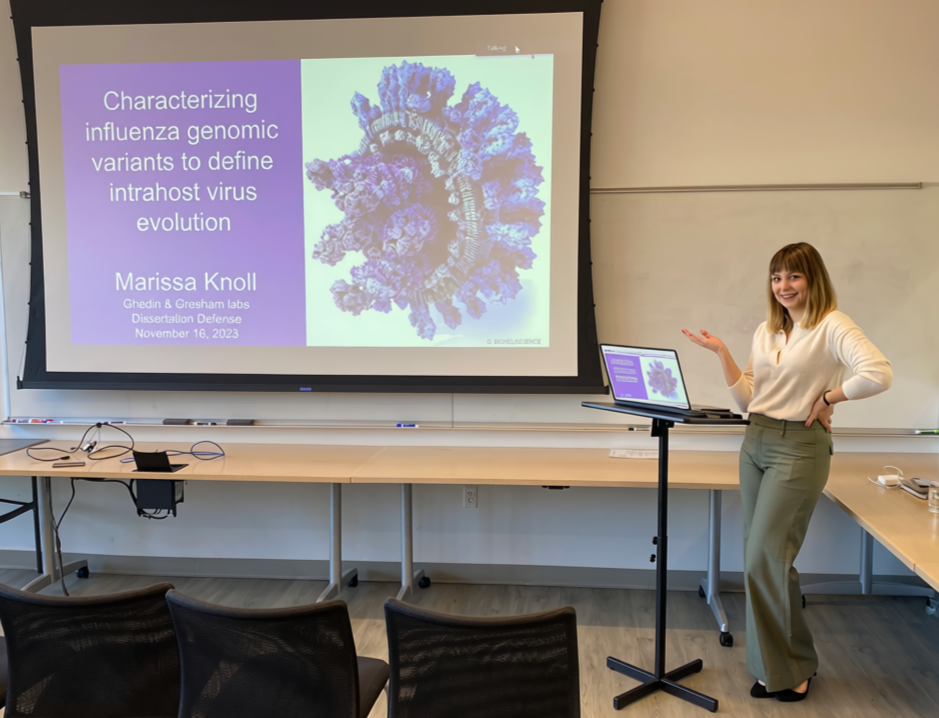
As a postdoc at the Sanger Institute, Marissa studies respiratory viruses like SARS-CoV-2, influenza, Respiratory syncytial virus (RSV), and others. She uses genomics to study the DNA of viruses and then builds ways to study the family trees of pathogens that can make humans sick. Marissa’s research can help to inform epidemiological decisions around disease surveillance, outbreaks, and chains of transmission.
In this blog, Marissa shares with us what her move to the Big Apple after undergrad was like, what she does today as a postdoc in Dr Ewan Harrisons’ group, and her love of good old fashioned romcoms and cats for good measure.
You moved to New York City for your PhD, after coming from a relatively quiet hometown. What was that like?
I intentionally only applied to PhD programmes in big cities. That move was a deliberate "vibe shift" from my university town, Amherst, to the heart of Manhattan. I was accepted to a PhD programme at New York University (NYU) where I found myself rotating through different labs. My rotation with an influenza research group immediately whet my appetite for solving problems related to medicine, and I remember thinking that it was just the coolest thing in the world to read about and research.
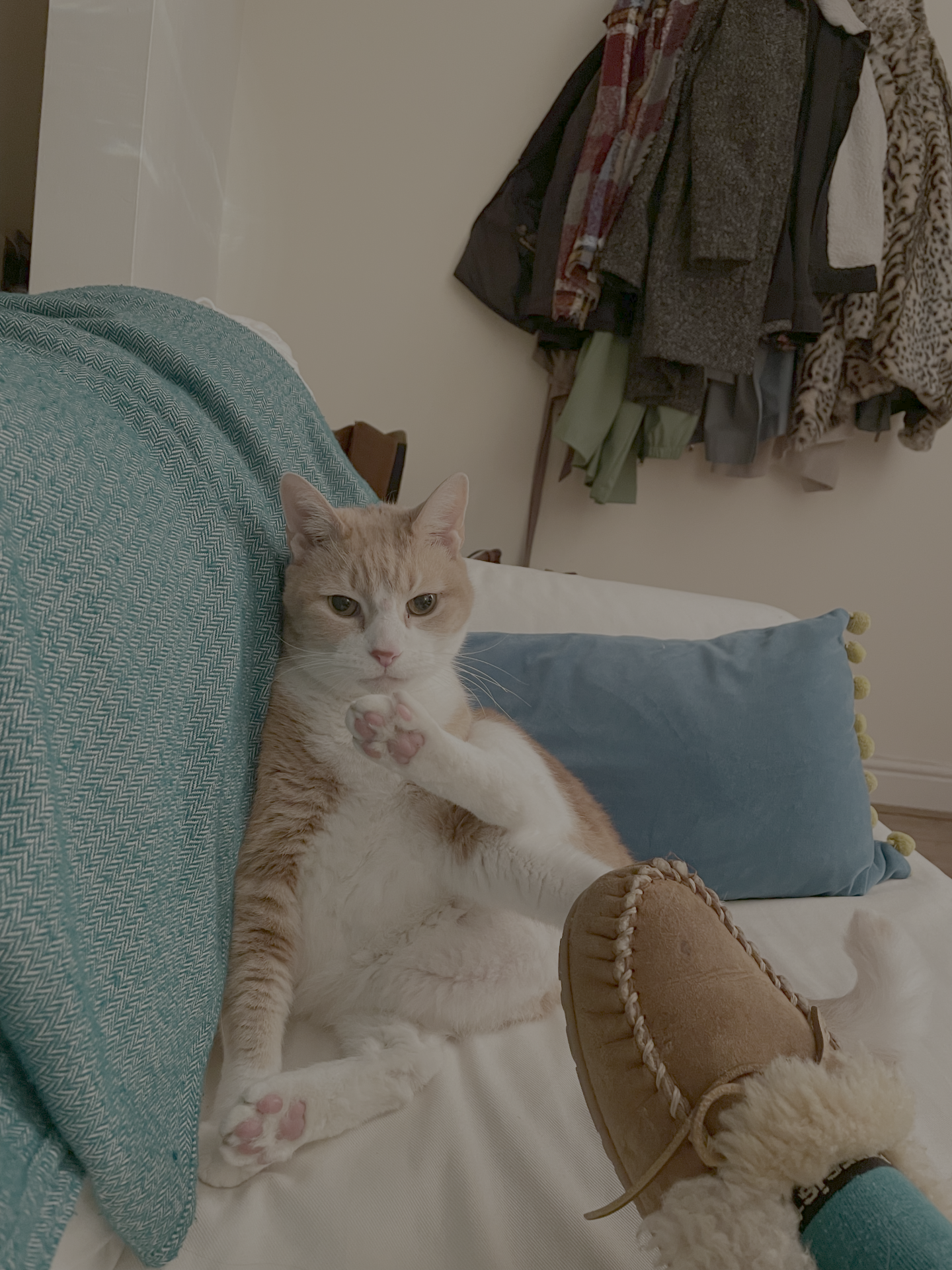
There was one minor hiccup six months into my PhD: COVID-19. The pandemic brought my exciting life in New York City to a standstill. During lockdown, I survived the stress of the pandemic through a mix of romcoms – classics like When Harry Met Sally and About Time are some of my favourites – and fostering cats. I convinced my flatmate who had never been a cat lover to let me adopt ginger Oliver. Oliver even moved across the Atlantic Ocean with me when I joined the Sanger Institute.

What attracted you to apply to the Sanger Institute?
Having a German passport, I had long been interested in moving to Europe as part of my career journey, and moving to Cambridge felt like a great choice.
At the time of applying to the Sanger Institute for a postdoc, I was at a weird stage, where I was post-PhD and had temporarily moved back home to job hunt. I was applying to lots of places and doing a fair amount of research into who I would like to work with next.
Ewan Harrison’s research group stood out to me. The group’s expertise is in re-deploying sequencing technology and bioinformatics methods developed during the COVID-19 pandemic to study other circulating respiratory threats, like flu.
This type of research appealed to me and luckily, around the time I contacted Ewan to learn more about his research, there were open positions in his group that I applied to.
What was the move from the USA to the UK like?
Moving an entire life including a cat from New York to Cambridge was made easier by the Global Mobility & Immigration Service at Sanger; the team were helpful in supporting my application for a Global Talent visa. This visa means I have a clear path to citizenship if I would like to stay in the UK to work long-term.
As for moving internationally with a pet, moving Oliver across the Atlantic was a significant logistical undertaking; there were requirements for the cat that felt more challenging than my own immigration process!

Packing to move to the UK with help from Oliver the ginger cat.
Images credit: Marissa Knoll.
What do you study as part of the Respiratory Virus and Microbiome Initiative (RVI) team?
I use viral sequencing data to inform epidemiological decisions. Epidemiology is the scientific study of the distribution (who, when, and where), patterns, and causes and risk factors of health and disease conditions in defined populations, rather than just individual patients. By studying the DNA of viruses, we can learn a lot about how they evolve, where they’ve come from and how they are spreading. Hopefully overall by understanding the changes and movement of viruses we can help prevent future pandemics.
As part of your postdoctoral research, you use a method called bait capture. Could you explain that method in simple terms?
Bait capture is a technique we can use to pick out what we are interested in, from a mixed-bag of lots of other things. In the RVI, we use bait capture to pull out viral DNA from complex patient samples that could have human DNA, bacteria, fungi, and other DNA contents we do not want in our analysis.
Let’s say you have just moved to the UK and are trying to shop for cereal in an aisle full of unknown brands. One method you could use is shotgun metagenomics - sampling all genes and organisms present - which is like walking into the cereal aisle and trying to put every single box into your cart.
This is a broadly unbiased way to try the whole range of cereals on offer, but you might miss some promising candidates because there is so much "noise”, like if there’s ten boxes of Crunchy Nut on the shelf but only one box of Coco Pops. On the complete other end of the spectrum, we have amplicon sequencing. Amplicon sequencing would be like grabbing only Coco Pops – you get lots of information about a single cereal, but you miss the diversity of what else is on offer.
The method I use in my research is more of a middle ground called bait capture. Bait capture is like having a grocery list for half a dozen different brands of cereal, based on friends’ recommendations. Here, the items on your list are individual “baits". Baits are short nucleotide sequences that pull out a whole panel of viruses – flu, respiratory syncytial virus (RSV), SARS-CoV-2, etc – from a busy crowded sample. You can design these lists to target whatever you’re interested in.
So for my research, an ideal grocery list is made up of tens of thousands of baits targeting about 30 common respiratory viruses. This makes for a long but defined grocery list resulting in just what I need from the cereal aisle. The method is useful in real life because viruses make up only a small amount of the genetic material in human samples.
“Bait capture allows us to use genomics on clinical samples to track how viruses evolve and spread with high precision. This can inform studies such as the project run with The UK Health Security Agency’s flagship SARS-CoV2 Immunity and Reinfection Study (SIREN) which is monitoring winter viruses in healthcare workers to help pandemic preparedness.”
What is postdoc life at the Sanger Institute like?
Being a postdoc at Sanger has been a lovely experience! Both the Sanger Institute postdocs group and the Postdocs of Cambridge Society are very active and friendly and host lots of fun events where we can meet other early career researchers, for example the annual postdoc bake-off on the Wellcome Genome Campus.
Ewan’s group are amazing to work with and since the majority of us are non-Brits, we often have fun discussions at lunch time about quirks of the UK (who knew that whipped cream in a can is called squirty cream here).
I find myself in the same position as many early-career researchers: deciding whether to stay in academia or explore other types of science-adjacent roles. For now, I remain focused on processing data, communicating my research via giving conference talks and papers.

The RVI group punting together on the River Cam. Credit: Marissa Knoll.
What do you do in your spare time besides crunching data related to viruses?
When I am not at work, I enjoy reading, staying active, baking, and hanging out with Oliver. Cambridge is a beautiful and historic University town, and I have taken advantage of that by being affiliated with Queens’ College. London is a quick train ride away when I need a big city fix. There are lots of differences between living in the US and in the UK, but I have found lots to enjoy here. And I still insist that my friends celebrate 4th of July, Halloween, and Thanksgiving with me for a little taste of home.

Image: Marissa and other Fellows at an event held at Queens College, Cambridge.
Credit: Marissa Knoll.


