


Image credit: Sam Ebdon / Wellcome Sanger Institute.
In this blog, we hear from Wellcome Sanger Institute PhD student James McCulloch about his favourite invertebrates, the springtails, and their extraordinary cryptic diversity.
A booming population of tiny critters is right underneath your feet. Each leaf you crunch and each woodpile you pass hosts an abundant life form you may never have heard of. Enter: The springtail.
Encouraging pollinators and biodiversity on the Wellcome Genome Campus comes with some tangible perks. Butterflies drift through the orchard. Bees buzz along lush borders. Wasps join you for lunch, and endangered stag beetles find homes in specially marked log piles scattered – intentionally – around Campus.
But there is one easily overlooked group of creatures not clearly visible unless you know what you are looking for. They play a key role as soil recyclers and have some seriously unusual ways of passing on their genes. If you have not guessed by now, I am talking about springtails.
If springtails are new to you, do not fret. There are several researchers in Dr Kamil Jaron’s Group at the Wellcome Sanger Institute who dedicate their research to studying these creatures. Evolutionary biologist Kamil and his team are interested in how springtails – and other organisms – pass their DNA down to their offspring, including some very unusual reproductive mechanisms.
We chatted with James McCulloch, the UK’s national springtail biological recorder, and a PhD student here in the Tree of Life Programme at the Sanger Institute. From an early age, James was keen on identifying the species he saw around him. Today, he’s the person in charge of recording official springtail sightings in the UK, and verifying their proper identification thanks to his encyclopaedic springtail knowledge. Now he’s made that a full-time job, he goes above and beyond identification to studying springtail DNA in minute detail.
What led you to a research career in the natural sciences?
My route into springtails started with my love of the outdoors, not in a lab. My mother is South African, and spending time there as a child exposed me to extraordinary biodiversity. Coming back to the UK, I realised that, while the species are different, there is a huge amount of life to be discovered on our own doorsteps, if you look closely enough.
When I was about 11, I started a nature‑themed blog where I recorded anything interesting that I would find outdoors. Soon after, I joined an online identification community where people would upload photos of organisms and help each other work out what they were. That mix of personal challenge and shared discovery hooked me; before I knew it, I was a fledgling taxonomist, obsessed with classifying the world around me.
With help from that community, I set myself a broad goal: to identify as many different kinds of life as I could. By the time I was 12, I had recorded almost 1,000 species. I became involved in ‘pan species listing’ – trying to record as many species as possible in the UK. It sounds like a collecting game, but it generates real biological records that scientists and conservationists can use. By the time I applied to university, I had logged more than 4,000 species.
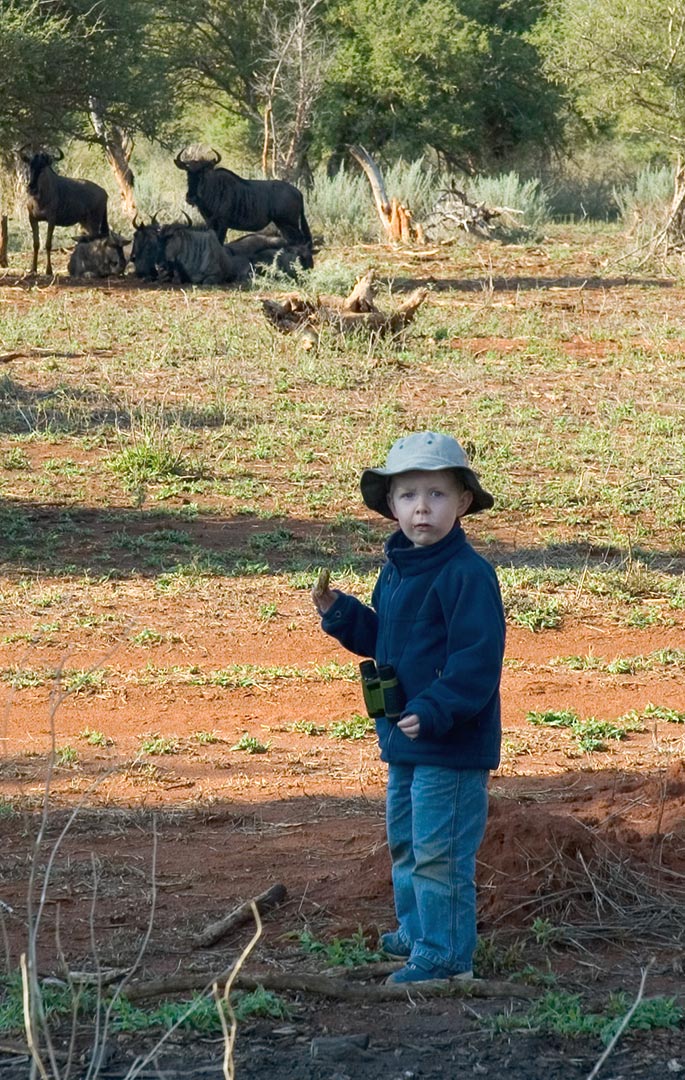
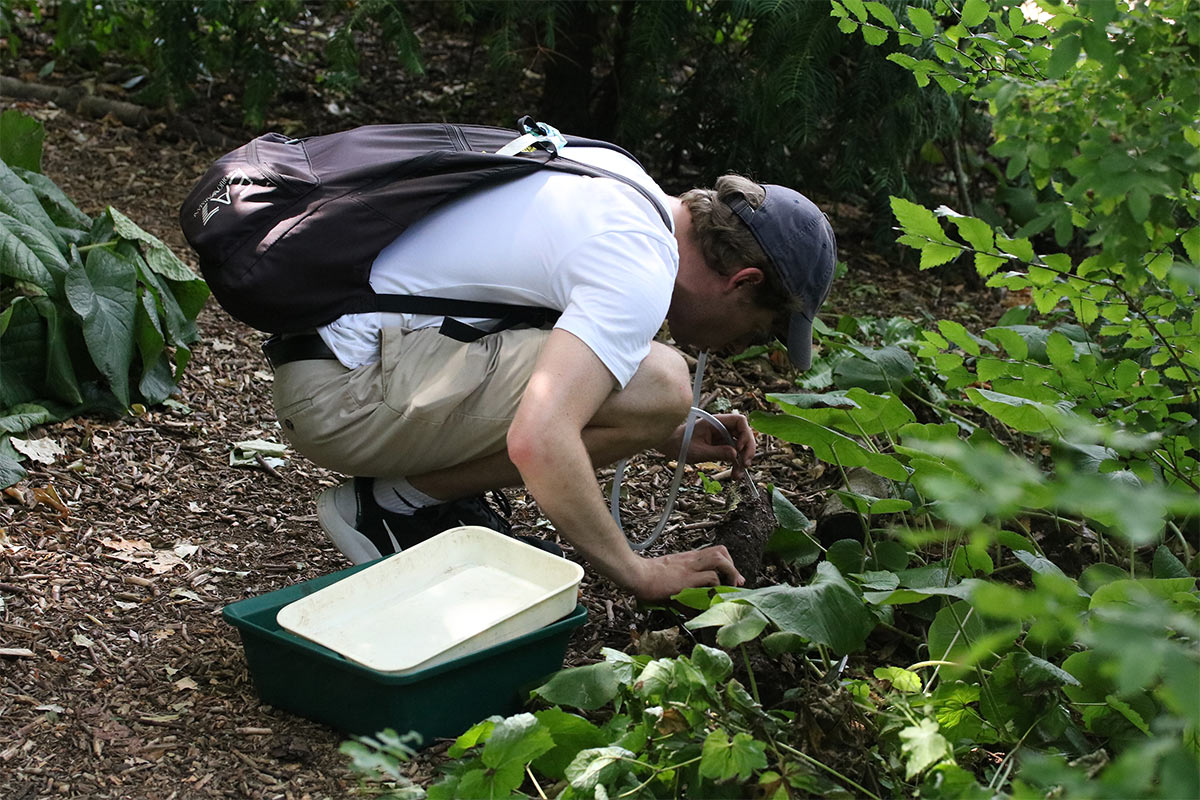
James McCulloch then and now. Left: James aged 3 years, enjoying the diversity of species in South Africa. Right: James pursuing his love of nature by collecting species for the Darwin Tree of Life project in the UK. Images credit: James McCulloch / Wellcome Sanger Institute.
This nature-caching pastime sounds like a stamp-collecting exercise – tell us more!
People often compare recording species to Pokémon Go. You go outside, you ‘collect’ things and tick them off your list. This is of course fun in itself, but for me what really makes it rewarding is how much you learn in the process. This can even include novel scientific discoveries, which can be made by anyone, anywhere. Most people might ignore the beetles flying around their clifftop campfire on a Cornish holiday, but the motivation of pan-species listing had me running around trying to catch them with my bare hands for a closer look. After checking the literature, I realised I had rediscovered the chafer beetle Amphimallon fallenii in south-west England, where it was thought to be regionally extinct.
What really makes it rewarding is how much you learn in the process. This can even include novel scientific discoveries.
That is very close to what I was doing as a research assistant supporting the collections for the Darwin Tree of Life Project. Each day I’d spend at the University of Oxford’s Wytham Woods would involve check whether a species needing a genome sequenced was already on my list, and feel a rush whenever it was not.
You began by identifying invertebrates, but what shifted your path towards genomics?

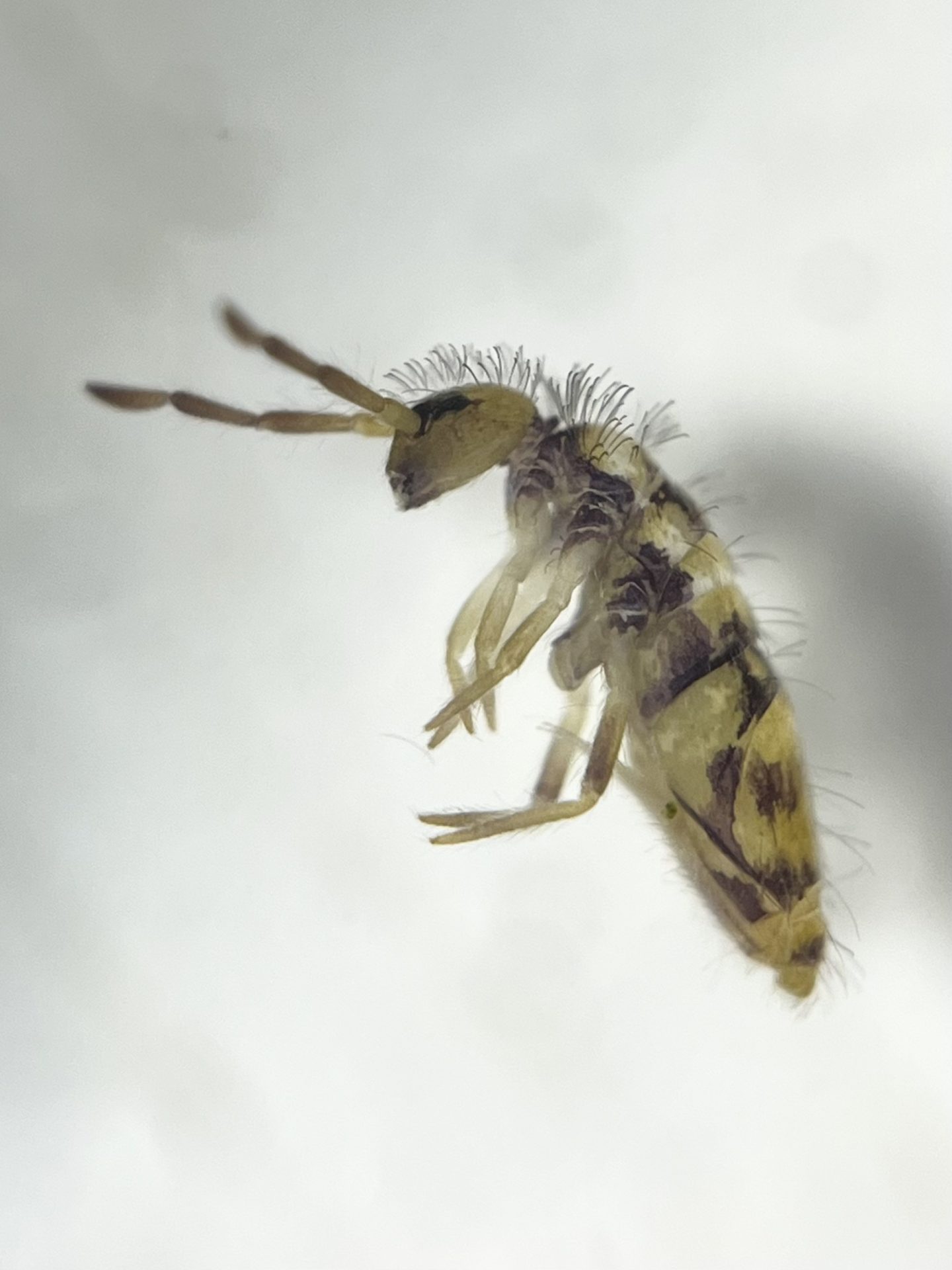
Orchesella flavescens is a springtail species and one of James’s favourites. He notes: notice that it has an unequal number of antennal segments on either side – this is a peculiarity of Orchesella; they should have six antennal segments on each antenna, but the antennae are easily damaged and regularly grow back with fewer segmental divisions. Image credit: James McCulloch / Wellcome Sanger Institute
At the University of Oxford, I knew I wanted to work on invertebrates and evolutionary biology. A summer project at the University of Oxford with Professor Peter Holland and Dr Liam Crowley led me to sampling invertebrates for the Darwin Tree of Life Project – essentially going out to collect new species for genome sequencing.
For a couple of months, my job was to sample and identify invertebrates, then prepare them so they could eventually be sequenced. Over that summer, I collected around 200 species that had not been sequenced before. Many of those specimens are still being turned into new genomes.
In Oxford when the weather was bad, I worked indoors with Professor Stuart West’s group on social evolution in ants, and later on tiny asexual rotifers – animals that never (or very rarely) have sex. That work got me thinking about how genomes change and how lineages adapt, even when they do not reproduce in the ‘usual’ ways.
Without me planning it, these projects nudged me towards genomics and the Sanger Institute. I began to see how continuing my studies into the DNA sequences of my favourite species, like springtails, could answer questions that morphology alone could not – especially for cryptic species that look identical under a microscope but are genetically distinct. Today as a PhD student co-supervised by Kamil Jaron and Joana Meier, I’ve found a project that allows me to meld my ongoing interests while supporting my academic growth in the field of genomics.
Are you always on the lookout for new springtail species?
Thanks to the habit I have formed for looking at what was right in front of me, I have indeed encountered some curious novelties.
One day my dad took a bird box down from a tree in our garden in Surrey and suggested I check behind it. There, I found tiny springtails I did not recognise. They belonged to a species that had only been recorded twice before in the world: once in Kent in the 1970s and once again in Surrey in the 1990s.
That discovery helped kick off a collaboration with colleagues in the Netherlands and Belgium. By reviewing specimens and photos from around the world, we showed that this ‘rare’ springtail is actually fairly widespread across Western Europe and even present in Canada; it had simply gone unnoticed.

Peterhouse college walls revealed new species to James. Close up imagine of Hypogastrura springtails. Images credit: James McCulloch.
Since secondary school, I have been building an informal atlas of the springtails of Surrey. Every time I think it is finally finished, I find a new species. That constant sense of discovery is one of the reasons I enjoy springtails so much.
When the UK’s national recorder for springtails sadly passed away at the end of 2024, I decided to step up and take on that role. The role involves identifying and recording the taxonomy and biology of the UK’s springtails. I have some enormous shoes to fill for this role, but I am honoured to continue an important legacy at a time when new springtail records – including undescribed species – are appearing all the time.
RELATED SANGER BLOG
Springtails, fly testes and the secrets of strange reproduction
Dr Kamil Jaron is interested in strange reproduction (in a genomic sense). His group explores the changes in DNA variation and chromosome structure caused by the different ways species reproduce, and how that drives evolution.

What do you tell people who have never heard of springtails – besides reminding them springtails actually are not insects?
When I tell people I work on springtails, many have never heard of them and assume they must be rare. In fact, the opposite is true.
A comparison I like to use is birds. Birds and springtails each have just over 10,000 known species. But we know far more about birds. There are hundreds of bird genomes – an ever-growing number thanks to reference genomes generated by the likes of the Darwin Tree of Life Project – whereas there are only a few dozen genomes of springtails. Yet springtails occur at incredibly high densities: it is estimated that 32 per cent of all terrestrial invertebrate individuals are springtails. You can have around 100,000 individuals in a single cubic metre of soil.
You can have around 100,000 [springtails] in a single cubic metre of soil.
Springtails are not only numerous; they are busy. They have weak jaws, so they generally feed on fungi that have already started to break down dead plants. That makes them a crucial part of the decomposition chain, helping recycle nutrients and supporting complex soil ecosystems.
As humans we should care about healthy soils. Soil health impacts agriculture, carbon storage and biodiversity above ground. So it makes sense to care about the springtails that help keep soil happy.
For me, that is where springtail biology stops being a niche interest and becomes a question of how we look after the systems we rely on.
Could you tell us a bit more about your PhD research at the Sanger Institute?
Some of my current work focuses on a group of globular springtails called Dicyrtomina, whose patterned bodies make them favourites among macro photographers. At the start of last year, only four species of this genus were recognised in the UK. By carefully scanning online photographs and then collecting my own specimens, I have already added three more.
One of these species has an interesting backstory. I first noticed it here on Campus and could tell it looked different from our usual springtails. After some detective work with online image libraries, I realised it matched an Australian species.
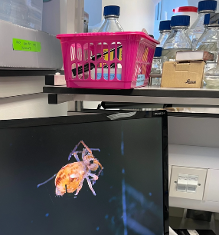
A lot of time can be spent in the microscopy room identifying springtails. Images credit: James McCulloch.
Using records from citizen‑science platforms and my own sampling, I have shown that this springtail is now widespread across Western Europe. More intriguingly, I have found individuals that appear to be hybrids between the newcomer and a native species. Early genomic analyses also support this idea.
Hybridisation (interbreeding) between introduced and native species is a common ecological challenge. In springtails, it could erode the local adaptation of native populations to particular soils or climates. Because these animals are so small and similar‑looking, we often need genomic tools to even spot that this is happening.
To add further complication, my preliminary genomic results suggest that within the seven morphologically-recognisable British Dicyrtomina species there are also ‘cryptic species’. These species can only be distinguished from each other using DNA sequences.
My research involves quantifying and explaining the surprising diversity of soil organisms. There is incredible diversity hiding just under our feet, yet we do not have a reliable estimate of the diversity of creatures like springtails. My research goes beyond identifying and asks why springtails are so diverse. How do cryptic species originate when they are look identical and live in the same exact location? I will look into populations, gene flow, genetic bottlenecks, and geographic distribution – all through the lenses of taxonomy and genomics. It will be exciting to see what we can find out.
You seem to be really good at identifying things, could you explain the ‘taxonomic impediment’?
Working on springtails brings me up against a broader issue in biology: the ‘taxonomic impediment’. There are far more species on Earth than there are taxonomists to describe them, and modern tools are revealing hidden diversity faster than we can give them names.
If we do not know what a species is called, it is harder to protect it. Describing a new species takes time and specialist skills such as microscopes, the ability to prepare and examine specimens in detail, and access to museum collections. Increasingly, we also need genetic data, especially for cryptic species that look identical but differ in their DNA and ecology.

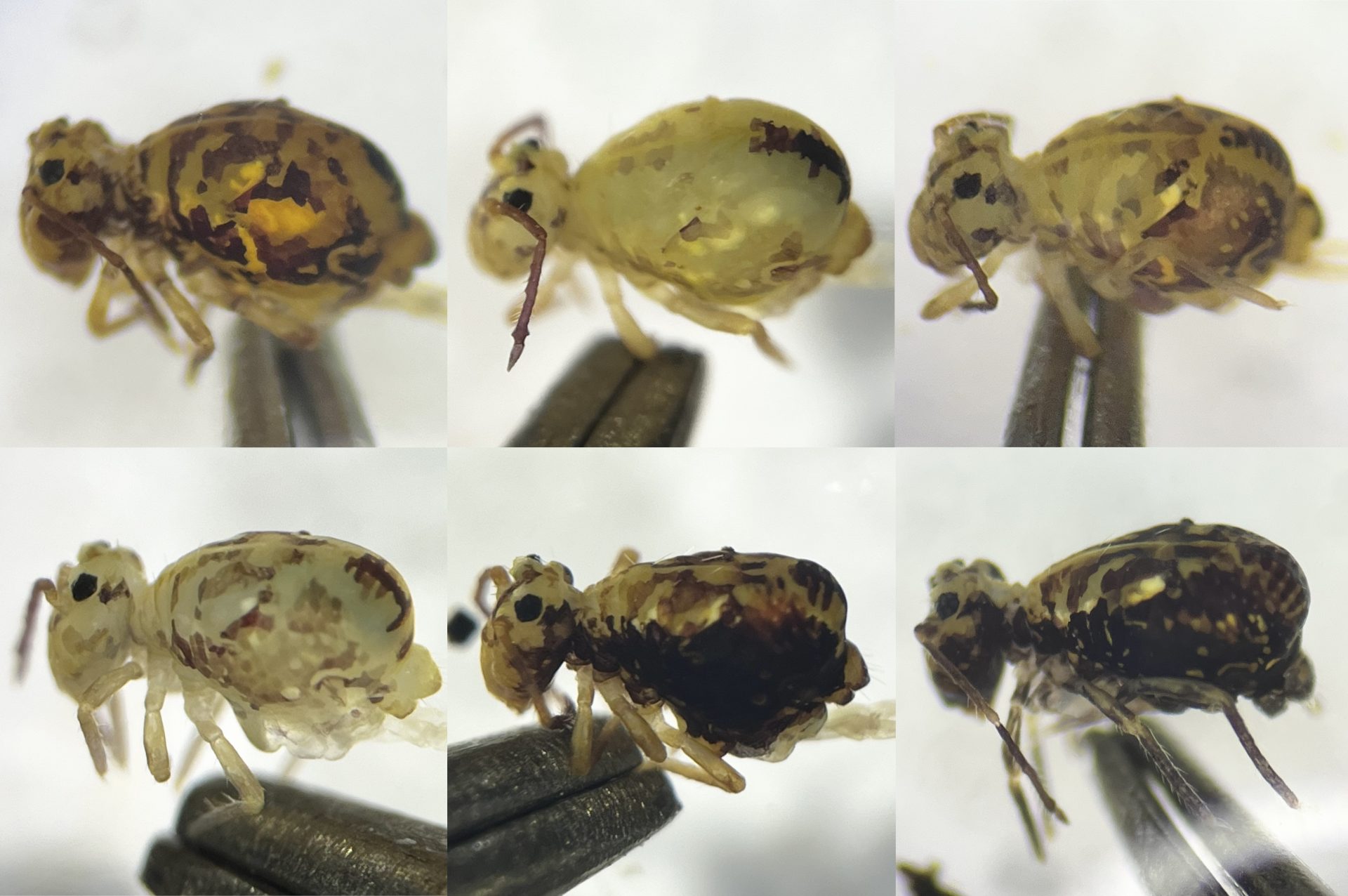
James described these four new species he found in glasshouses. Images credit: James McCulloch.
One of the problems I would like to work on in the future is how to make genetic and genomic approaches more accessible to people doing taxonomy. That might involve identifying particularly useful genetic markers – short stretches of DNA which vary between but are uniform within species – or developing simpler ways to integrate DNA data into species’ descriptions.
For now, I try to help by building collaborations. A big part of my work involves coordinating a network of volunteers who send preserved springtails from around the world. It is a lot of logistics, but it is also encouraging to see how many people are willing to contribute to understanding hidden biodiversity.

Any advice for those considering a new hobby melding taxonomy or springtails, or both?
For most people, springtails remain invisible. I think that is partly because we are not used to looking for them.
Many people I talk to about my research have never heard of springtails, so they assume they must be rare. My party trick is to explain what a springtail is, say they are actually very common, and then walk to the nearest patch of leaf litter or a twig pile and show that they are really there. You do need to get your eye in, but once you do, you start seeing them everywhere.
My party trick is to walk to the nearest patch of leaf litter and show that [springtails] are really there. You do need to get your eye in, but once you do, you start seeing them everywhere.
I am also optimistic about the role of digital tools. Classroom tablets can become nature‑recording devices. Platforms like iNaturalist can act almost like a real‑world Pokédex, where children and adults alike upload photos, get identifications and help build global biodiversity datasets.
The level of undescribed biodiversity is higher than many people realise. It really is possible to go out and find a species that is new to science. If more people knew that – and saw how similar it is to a game like Pokémon Go – I think a lot more of us might be tempted to look down at the leaf litter, and to help uncover the tiny creatures quietly keeping our soils, and our planet, alive.


