


Image credit: Alexandra Canet / Wellcome Sanger Institute
In this eighth part of our innovator blog series, we spoke to Dr Jolynne Mokaya, Public Health Research and Engagement Lead at the Wellcome Sanger Institute. With an entrepreneurial and ingenious spirit, Jolynne is helping to build a community of practice of cholera experts to advance control efforts by integrating genomic evidence into regional strategies alongside other key control measures.
Listen to this blog:
Listen to "Building a community at the frontline of cholera genomics" on Spreaker.
Innovation takes many forms – from a tweak that improves technology, all the way to the development of new medicines, networks or tools. Translating science is about applying research, moving it beyond the lab, or closing gaps in technologies so that it can be used to improve people’s lives. We spoke with Jolynne about her work building new relationships based on regional leadership, and how the Sanger Startup School gave her the confidence to take on this new role.
Jolynne, you are working on a new project across a set of cholera partnerships – what will you be doing?
It’s an exciting role! I have been tasked with developing a community of practice for cholera genomics. What this means in practice is to bring together local and regional experts who are based in cholera endemic regions. This includes countries in Africa, Southeast Asia, and Eastern Mediterranean, places that experience a high burden of cholera.
We want to bring the individuals at the frontline of cholera response together – clinicians, scientists, public health practitioners, and many others – to decide how to make use of genomics to inform cholera control, and to be at the centre of informing strategy more broadly. Genomics can provide vital information on which strains are responsible for large-scale epidemics. For example, we know that the EI Tor (7PET) lineage of Vibrio cholerae, the bacterium that causes cholera, is responsible for the ongoing seventh pandemic, which started in Indonesia in 1961 and has since spread worldwide, causing major outbreaks. Therefore, having access to these data, as well as being able to generate them in the first place will help shape the implementation of rapid and effective clinical and public health responses.
For that, the community needs to be a space of collaboration and partnership – to collectively identify the challenges relating to genomic data utilisation and how to overcome them together. It’s also a unique space for sharing knowledge, experiences and expertise that would support genomic data generation, analysis and also interpretation within each region.

Power imbalances tend to happen in collaborations between higher-resourced settings and middle- to lower-income settings, is this something you are taking into consideration?
Absolutely. With the community of practice the main goal is precisely to overcome those power imbalances. On occasion, philanthropic organisations as well as regional and global public health organisations approach a small number of globally recognised experts to ask: What do we do next? Where do we invest? What does the future of cholera look like? Many of them are not primarily based in or working within cholera-affected regions.
By building this community of practice, it’s an opportunity to take a step back and say, actually, there is this community that is based locally and they understand the needs deeply. These are the people to speak with. These are the people who should be contacted to define priorities, set funding strategies or to gain insight on where to invest resources when it comes to cholera.
We’re currently mapping the cholera genomics space. For example, when it comes to cholera genomic data generation and analysis, we’re compiling existing protocols and platforms, identifying key players in these areas, assessing where support is needed, and determining who to engage with to assist us and others interested in cholera genomics. They may be within the community, or outside of it, like here at the Sanger Institute.
Our approach as a community is to learn from each other and others, and leverage existing resources. This will inform the foundation for identifying remaining gaps and determining how to address them, using the broader ecosystem effectively.
“I see the community as a circle of collaboration. There is no need to be in the centre, you're part of the defining line, the edges, and that makes it a powerful setting. A community will only succeed when everyone is working together. Yes, everyone will have different ideas and perceptions, but having a space where everyone feels listened to, valued and respected – it’s unique.”
Dr Jolynne Mokaya,
Public Health Lead, Wellcome Sanger Institute
What does this community look like in practice?
It’s still early days, but we have a WhatsApp group, frequent virtual meetings with individuals, teams and wider groups to discuss issues and share progress, training courses and virtual seminars. These approaches are a space to share ideas, research, challenges and opportunities, and overall progress within the community, thus allowing people to keep learning from each other. WhatsApp is one of the main channels to communicate with announcements and more informally, but we’re also open to exploring the use of other social media platforms to see what works best.
We ran our first training in Zambia – the Vibriowatch and Cholera Genomics course – in February earlier this year, which was funded by The Gates Foundation. The course brought together various individuals from the field of cholera within Africa. The priority at that time was inviting those working in public health, because we were keen to support individuals who are fighting cholera in the front line. This was our main starting point and way of bringing people together. Then, with the interactions we'd had throughout the week, we started building this community, and the process is still ongoing with more people joining.

Participants at the Zambia training course. Image credit: Centre for Infectious Disease Research in Zambia (CIDRZ).
We will be delivering another course in Malaysia later this year, focusing on countries in Southeast Asia. We are also aiming to hold another one in Morocco in 2026, targeting countries in North Africa and the Eastern Mediterranean region, to strengthen cholera genomics capacity and continue expanding the community.
The people are there, we just need to optimise the resources, keep sharing knowledge and tools, and learning. That’s why the community is so important; it’s not a new shiny thing coming from outside, it’s being built from within to actually solve real world challenges. It’s incredibly rewarding and exciting for me.
When you applied to the Sanger Startup School, your idea was to build a network like this?
Yes, you’re quite right. I joined the fourth cohort of the Startup School in 2023, and my idea was to build capacity for bioinformatics and genomics in the African continent, focusing on large-scale sequencing and bioinformatics to support infectious disease control, and more broadly, clinical and public health interventions. Training and establishing robust computing infrastructure to support genomic data generation and analysis was central to my idea, alongside a network of people to support each other.
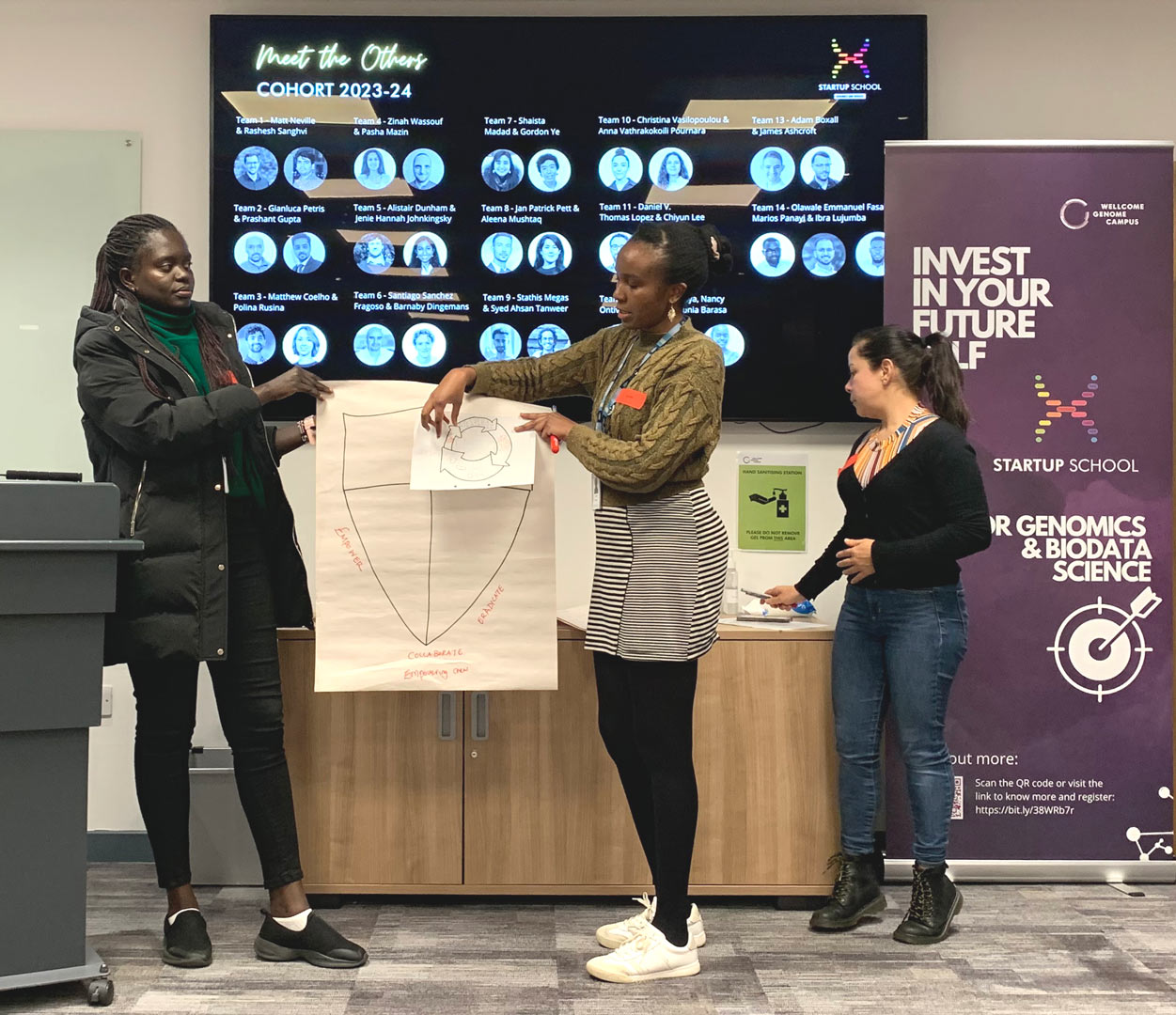
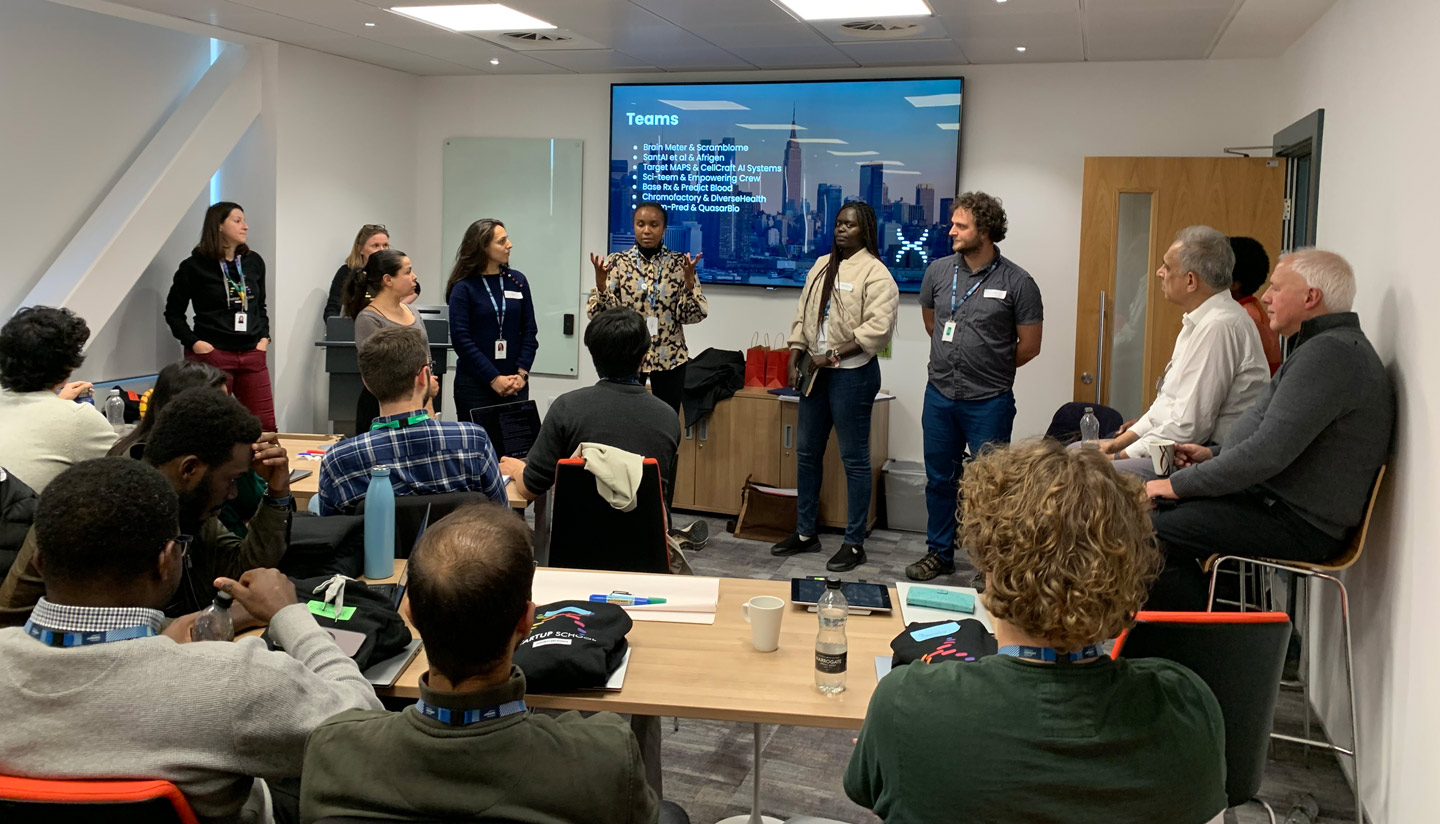
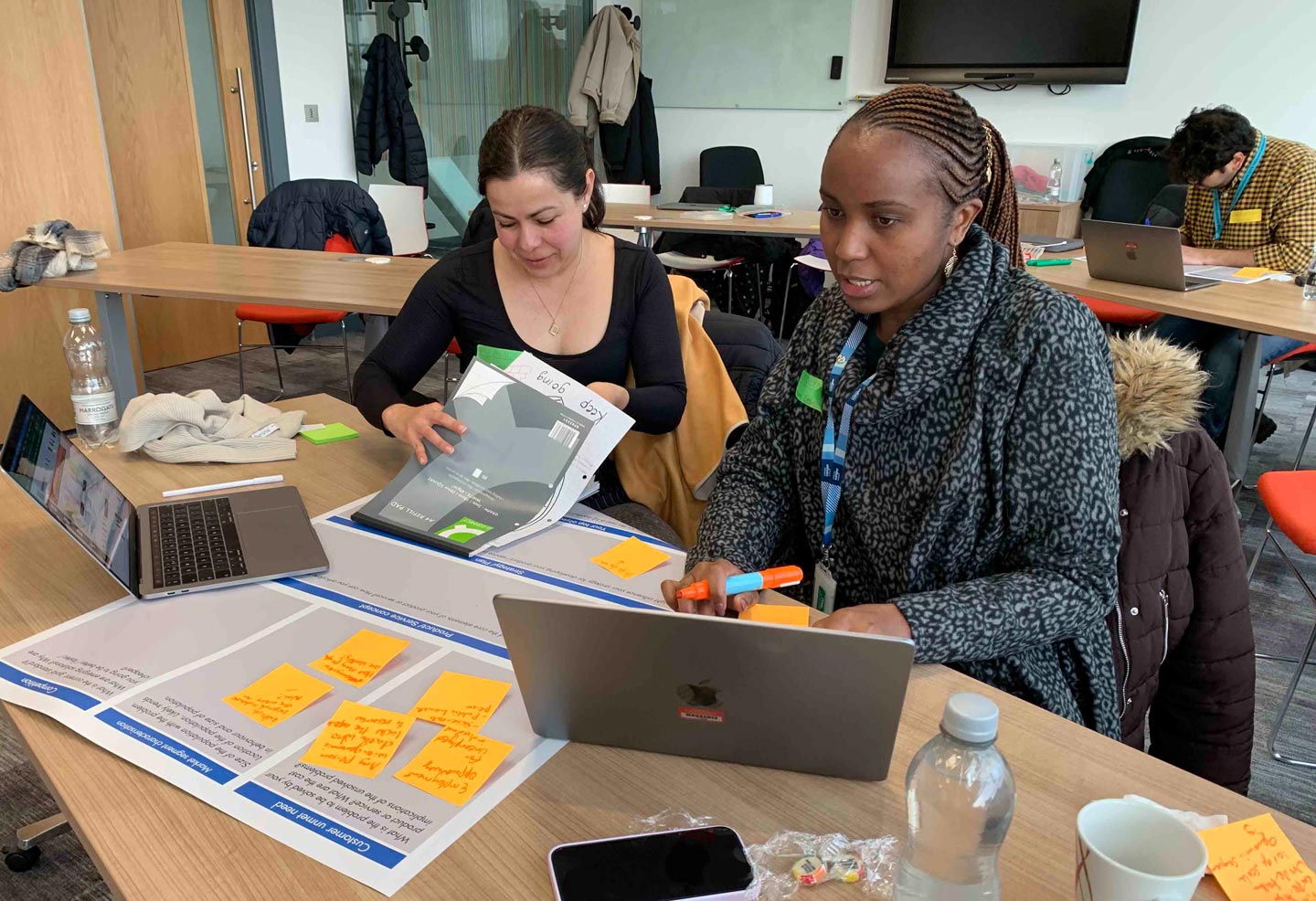
Incredibly, this project and my experience throughout the Startup School aligned really well with my next step in my career – this role – and the lessons I took from there are now helping me build the community of practice. For example, I learnt a lot about how to network and now, a lot of what I’m doing is building and maintaining relationships.
Another key aspect about the Startup School for me was the feedback we kept getting from mentors and speakers to take every new task as a learning opportunity. Now, every time I pitch my work to someone new, I value any feedback given – your work can always be better and interactions only help improve it. That is how I look at things now.
“I learn very well with stories and that’s something the Startup School did really well – bringing different people together, sharing stories of how people’s journeys began, what they're doing now and the lessons that they've learnt along the way. It was practical and I could relate. It gave me the opportunity to think – how does this align with what I want to do? It’s a programme I’d definitely recommend.”
Dr Jolynne Mokaya,
Public Health Lead, Wellcome Sanger Institute
Another central part of my Startup School project revolved around sorting out computing infrastructure in the African continent to underpin a strong bioinformatics capacity. But now that I’m working in this role, I realise that the community of practice will highlight the needs and potentially influence future investments through expert knowledge and experience. For example, we are working together to review existing tools and platforms used for analysing genomic data, looking for gaps in access, ease of use, and functionality.
At the same time, we are creating a simple, easy-to-use guide to help people choose the right tools based on their skills, resources, and needs. This process will help us clearly see where tools or support are still lacking. We are continuously discussing amongst ourselves and engaging with experts from diverse fields to explore solutions around existing structural and systemic challenges that continue to hinder large-scale genomic data analysis and bioinformatics in countries with fewer resources.
While recognising that many other approaches will also be needed to fully solve these problems, one approach would be to develop or optimise existing platforms to provide affordable, fast, secure, and scalable cloud computing with clear data governance policies that enable seamless data sharing with trusted partners. Our goal is to enable solutions that are not only technically robust but also equitable, accessible, and sustainable for all users.
The journey through Startup School really gave me the skills that I believe are key for me to deliver this work successfully, to not be afraid to be innovative, to be open to learning and listening and knowing that actually, for you to succeed, those connections and networks that you build along the way are crucial.


