

Image credit: ©The Royal Society / Syriol Jones


How the Barcoding for Beginners programme and BIOSCAN project are using genetic tools to investigate insect diversity across the UK.
Listen to this blog story:
Listen to "Intergenerational Insect Investigators" on Spreaker.
Back in 1998, a brave inventor strived to save his community from a gang. The inventor teamed up with a group of misfits to defeat the gang and reclaim their freedom. But this was no ordinary team, no, it was a team full of bugs! Yes, this is the plot of the Pixar animated film, A Bug’s Life.
In this film, there were ants, grasshoppers, caterpillars, ladybirds, stick insects, praying mantises, moths, black widow spiders, beetles, pill bugs and mosquitoes. This list represents just a tiny fraction of the insect diversity that exists on planet Earth.
At the Wellcome Sanger Institute we are working with partners across the country to collect and analyse the genetic diversity of one million insects from around the UK. The BIOSCAN project uses DNA barcoding to study insect species diversity and how this changes through space and time. This technique uses a short section of DNA to identify a species.
But DNA barcoding is not just for the professionals. With funding from the Royal Society, the Wellcome Connecting Science team at Sanger is working with schools across the UK to provide training and resources that will allow students to get hands-on experience with barcoding insects in their local area.
The Barcoding for Beginners programme provides a rare opportunity for students to contribute directly to a bigger scientific goal and conduct processes similar to the researchers working on the BIOSCAN project.
In this blog, we delve deeper into the BIOSCAN project and Barcoding for Beginners to highlight the value they can provide to both human and insect communities.
Intergenerational insect investigators
How the Barcoding for Beginners programme and BIOSCAN project are using genetic tools to investigate insect diversity across the UK
Story by Shannon Gunn, Senior Science Writer, Wellcome Sanger Institute. Published on 29 April 2025.
Images credit: ©The Royal Society / Syriol Jones
Listen to this blog:
Listen to "Intergenerational Insect Investigators" on Spreaker.
Back in 1998, a brave inventor strived to save his community from a gang. The inventor teamed up with a group of misfits to defeat the gang and reclaim their freedom. But this was no ordinary team, no, it was a team full of bugs! Yes, this is the plot of the Pixar animated film, A Bug’s Life.
In this film, there were ants, grasshoppers, caterpillars, ladybirds, stick insects, praying mantises, moths, black widow spiders, beetles, pill bugs and mosquitoes. This list represents just a tiny fraction of the insect diversity that exists on planet Earth.
At the Wellcome Sanger Institute we are working with partners across the country to collect and analyse the genetic diversity of one million insects from around the UK. The BIOSCAN project uses DNA barcoding to study insect species diversity and how this changes through space and time. This technique uses a short section of DNA to identify a species.
But DNA barcoding is not just for the professionals. With funding from the Royal Society, the Wellcome Connecting Science team at Sanger is working with schools across the UK to provide training and resources that will allow students to get hands-on experience with barcoding insects in their local area.
The Barcoding for Beginners programme provides a rare opportunity for students to contribute directly to a bigger scientific goal and conduct processes similar to the researchers working on the BIOSCAN project.
In this blog, we delve deeper into the BIOSCAN project and Barcoding for Beginners to highlight the value they can provide to both human and insect communities.
Barcoding across generations
The BIOSCAN project, which started in 2021, now has 73 partners and 102 sites across the UK. The project is exploring insect diversity across the UK over a five-year period. The many partners use tent-like Malaise traps to collect insects that are then shipped to us at the Sanger Institute for sequencing. The project aims to create a baseline characterisation of insect species diversity and act as a fundamental resource for DNA-based biomonitoring in the UK.

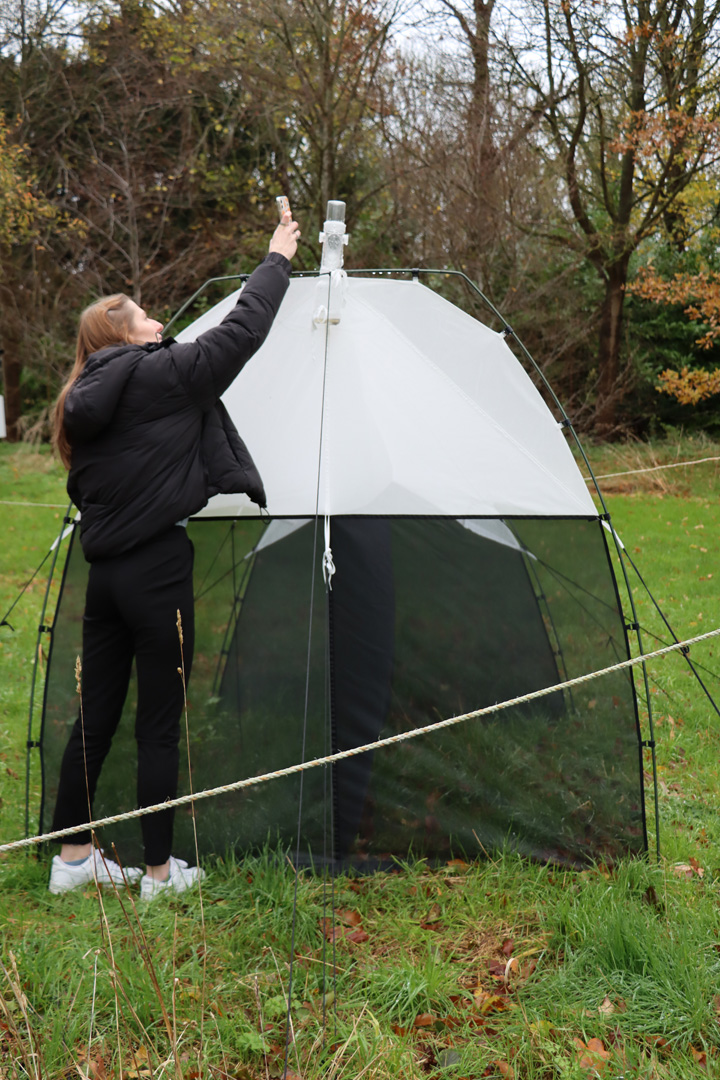
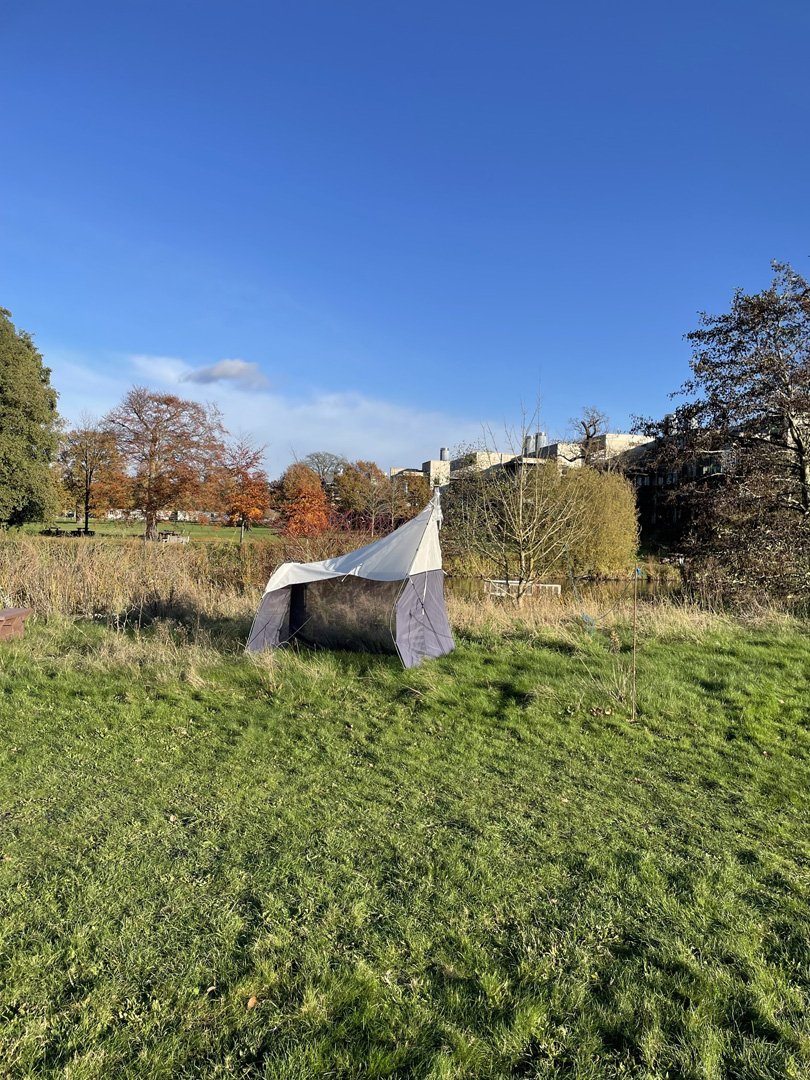


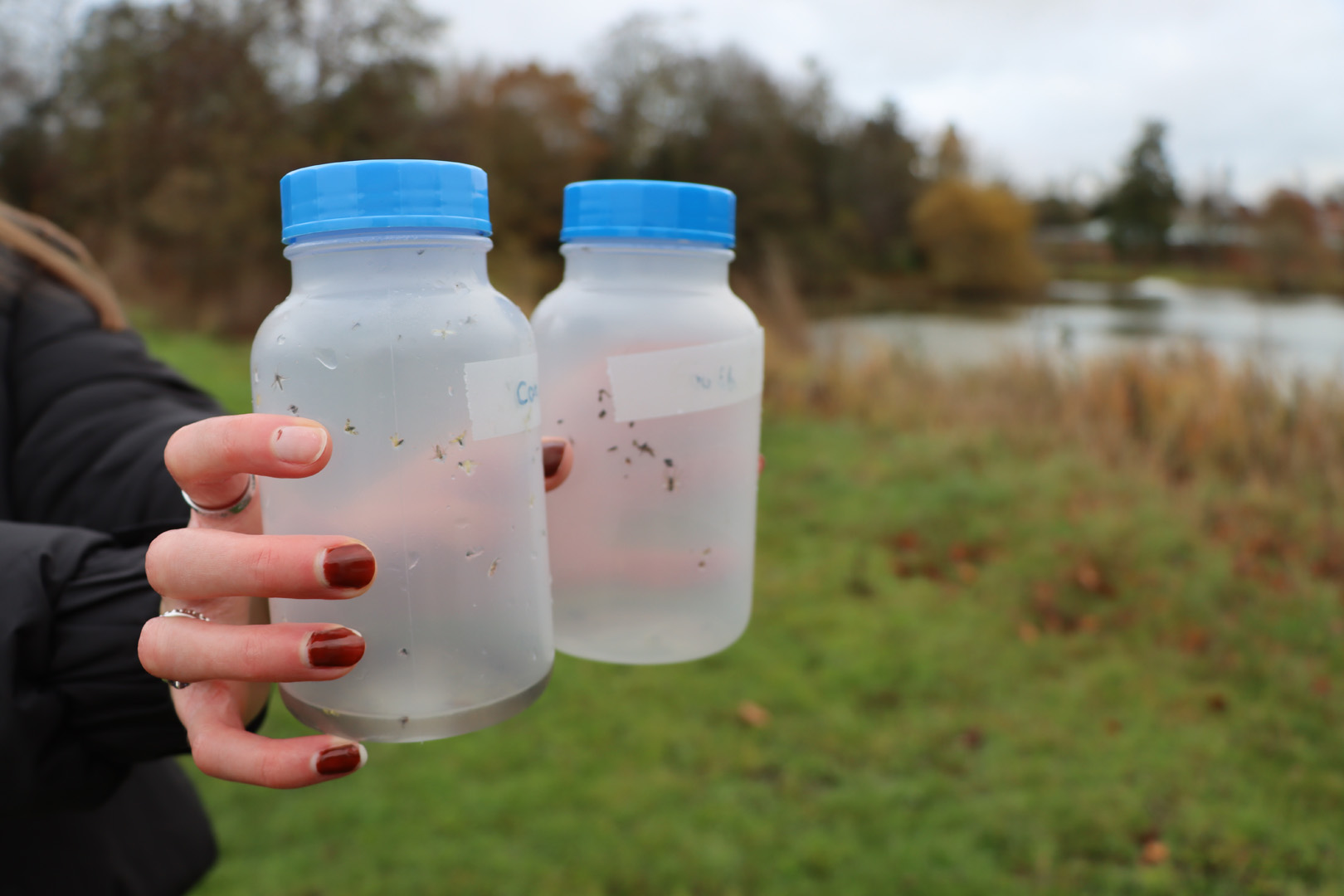

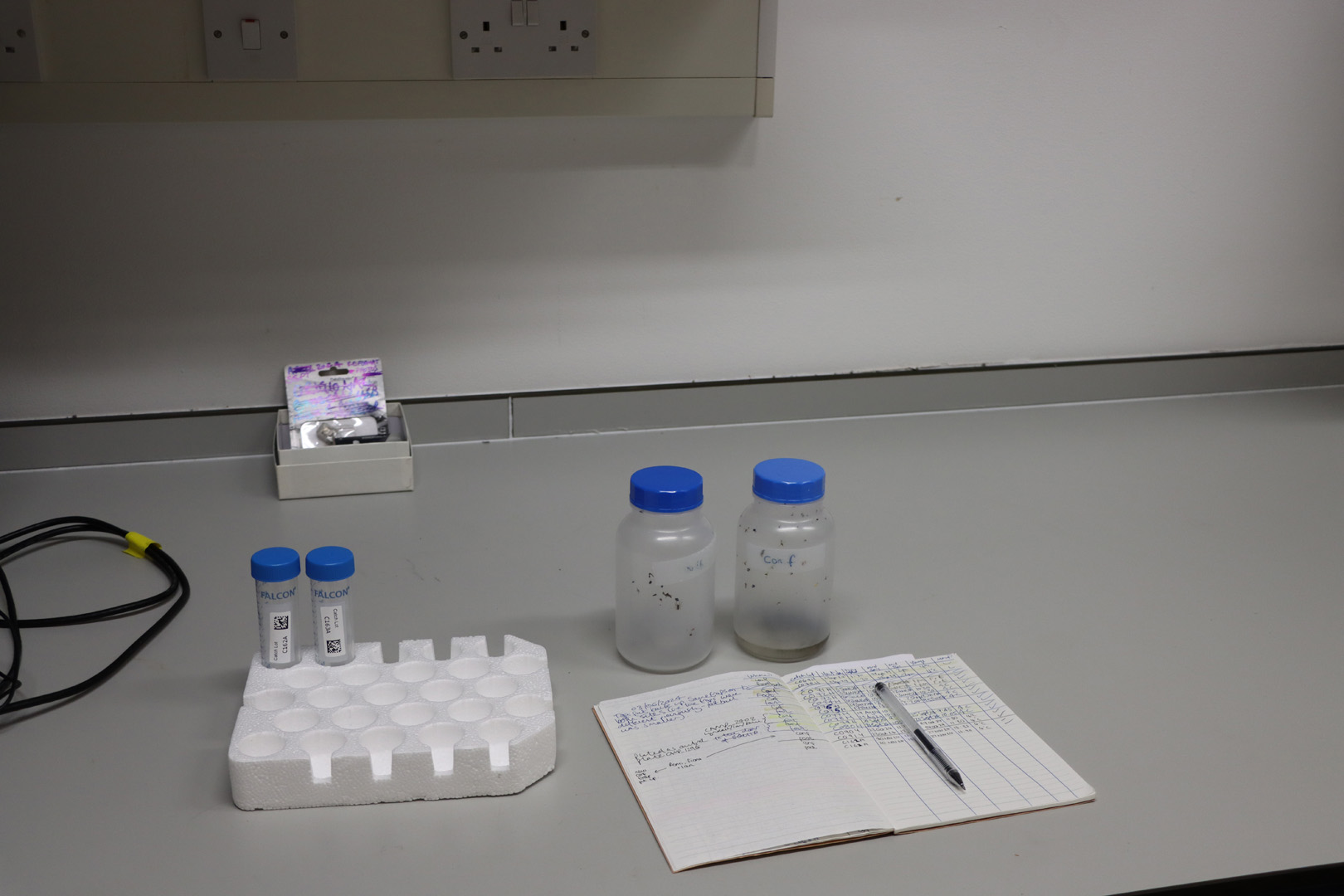
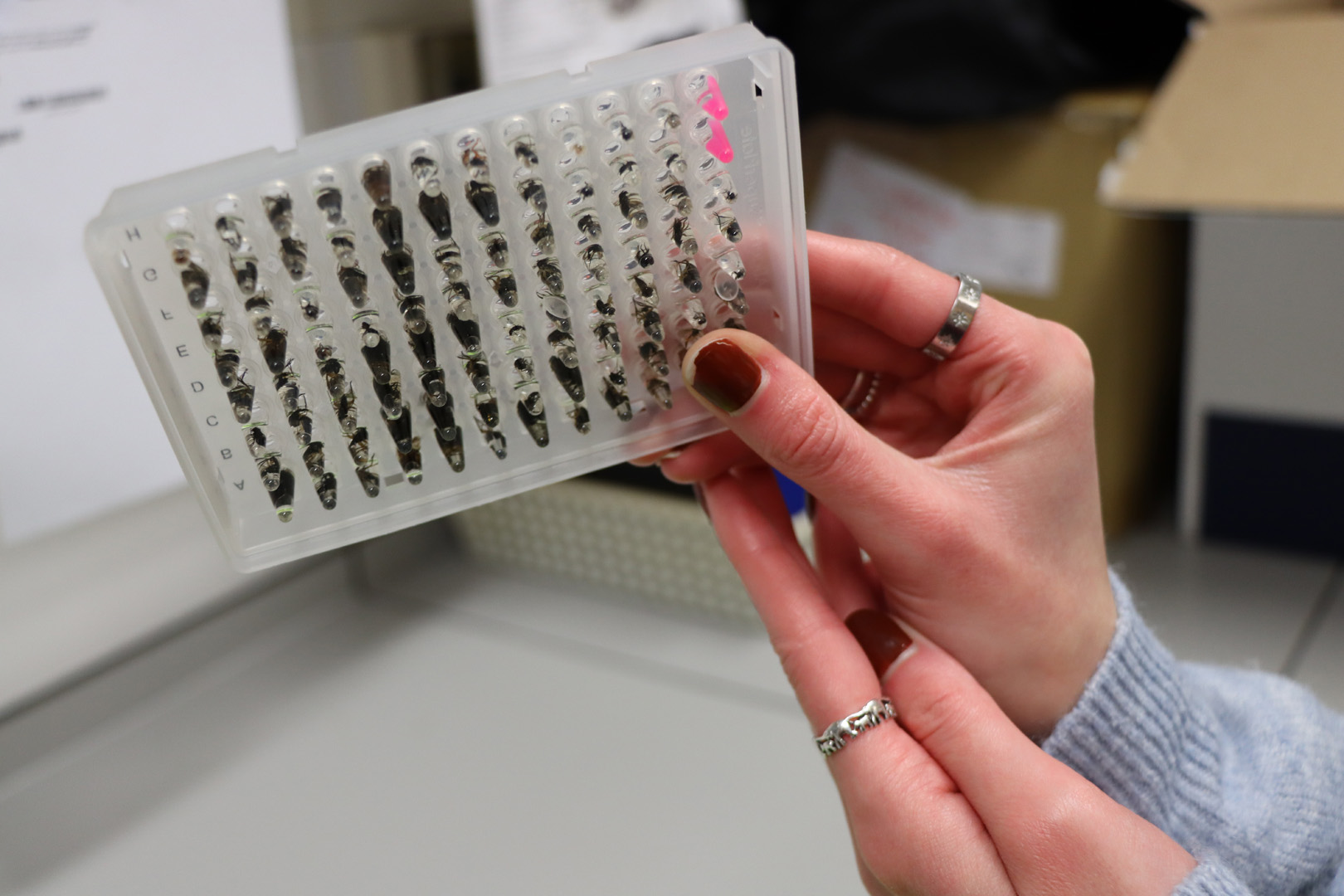
Understanding insect biodiversity is not just the role of our experts here at Sanger and around the world. The importance of biodiversity and conservation needs to be recognised and taught in schools early to ensure that the next generation of scientists are inspired and also have the skills to tackle the continued decline of species. However, access to specialised equipment can be challenging for many schools across the UK, with students often having to skip hands-on learning and stick to theory-based learning or watching videos of experiments due to limited resources and funding.
To address this, Wellcome Connecting Science has set up a programme called Barcoding for Beginners, supported by two years of grant funding from The Royal Society. This is a free programme that trains educators, then provides them with the resources and support to work with their students to undertake novel, inquiry-based projects using molecular biology and bioinformatics. The flexible programme includes 10 one-hour sessions for students. Schools are provided with all the equipment and resources necessary to conduct the project. It involves collecting insect samples, extracting the DNA, amplifying the DNA using PCR, visualising the DNA sample using gel electrophoresis and obtaining DNA sequences to compare against others in a freely accessible database.

Simplified stages of DNA barcoding and sample identification. Adapted from yourgenome.org.
“This is an amazing opportunity to work with educational professionals and inspire students about biodiversity, whilst they carry out real research, increase their awareness of careers and get hands-on experience with molecular biology techniques often not encountered until undergraduate studies.”
Karen Stephens,
Science Engagement Manager, Wellcome Connecting Science
Upskilling the next generation of insect explorers
One of the consistent things among researchers is that they all started in the same place – knowing absolutely nothing about genomics. While they are now experts in things such as sample preparation or sequence analysis, they once began as intrigued students that wanted to learn more. Engaging students early on in life can not only inspire careers in STEM but can also provide students with useful skills that can support them in the future. This includes both learning direct molecular biology techniques as well as interpersonal skills like teamwork.
During a recent visit to a partner school in Milton Keynes, we were able to observe the Barcoding for Beginners programme in full swing. As soon as we arrived, the students were eager to get out and collect their samples – despite the rain – checking under bins, in flower beds and in small crevices. The class then went through every step to get from their collected invertebrate to a DNA sample for sequencing. Along the way, the students learned new skills, such as micropipetting, DNA extraction, PCR and gel electrophoresis, all of which supports the theory they learn in class.
“Learning how to pipette and using advanced equipment was good because it mimics how the professionals would do it.”
Year 12 student,
Walton High School, Milton Keynes
“One of the things I learnt from this project was understanding the small amounts of sample that are needed to barcode the invertebrates. When you normally think of science, you think of things that are big. It is good to know how such small things can help us understand such grand concepts.”
Year 13 student,
Walton High School, Milton Keynes
“This project is similar to what I want to do in the future studying biomedical science. The skills I have learnt today will be important for what I would need moving forward.”
Year 12 student,
Walton High School, Milton Keynes
“What we have learnt today will definitely open up pathways now that we know what type of stuff we can do and how to do it.”
Year 13 student,
Walton High School, Milton Keynes
The amplified DNA barcodes are then sent to us here at Sanger for sequencing. Once this is complete, the DNA barcode sequences are sent back to the students to identify their invertebrates. There are plans to upload the students’ DNA sequence data to an integrated data collection and analysis environment called BOLD (Barcode of Life Data System). This platform is freely available to researchers around the world and aids in the organisation, validation and publication of barcoding data. It also plays a fundamental role in comparing sequences to each other and then clustering these together in a BIN (Barcode Index Number) which acts as a proxy for a new species.
This platform is also used for the BIOSCAN project, where over 3,000 unique BINs have gone into BOLD so far, thus contributing further to this database. These unique BINs could represent new species or different populations of the same species that have yet to be recorded. This reinforces the necessity for collaboration and open access of data as it takes a community, both scientists and students, to contribute to data diversity and scientific insights.
“Considering it is such a big thing that is happening in the science world, it is such an important thing for students to see that they can do it themselves. But also, that they're not just doing a pretend version. The data they produce are useful and can be used by scientists around the world.”
Dr Lyndall Pereira da Conceicoa,
Samples and Partner Relationship Manager for BIOSCAN, Wellcome Sanger Institute
Calling all barcoding enthusiasts
With a target of one million insects, the BIOSCAN team is still recruiting new partners across the UK to send us their samples for sequencing. One of the great things about the Sanger Institute is the ability to do genomics at scale – and barcoding is no exception to this. At our current rate of long-read sequencing, we are processing around 20,000 specimens per month – all of which is being done with only 0.1 microlitre of sample. The rest is being banked so that other future research can be conducted, such as population genetic studies. The team also envisions that in the future this type of work will be decentralised, with partners being able to sequence their samples locally, using portable sequencers like the MinION.
In the meantime, Wellcome Connecting Science is continuing to help recruit more schools to join the Barcoding for Beginners programme and hopefully encourage the next generation of scientists to contribute to projects similar to BIOSCAN in the future.
RELATED LINK
Interested in Barcoding for Beginners?
To register your interest in participating in the Barcoding for Beginners programme, please click here to email our Science Engagement Manger, Karen Stephens.

“The one thing I would say to other schools thinking of participating in the programme is - do it! Absolutely do it.
“When I did the training day at the Sanger Institute, it was nice because I hadn't done this type of stuff since I was at university, so it was useful to build my confidence. I usually don't get this opportunity. If I want to do a new experiment at work, I don't have time to learn it first myself, so I have to learn alongside the kids and see how it goes.
“This programme is very user friendly; all the tools are available online and all the equipment comes very organised – we didn't have to provide anything. Having hands-on learning for the students is so important. They are so used to learning about the theory behind these techniques and methods, but actually doing it allows them to make memories that they can link to their learning.”
Louise Archer,
Biology Lead, Walton High School, Milton Keynes
Despite being at different stages in life, both students and professionals are able to contribute to a data resource that is important for tracking and monitoring species diversity over time. This paves the way for groundbreaking research and has implications for future conservation efforts. But, just like the ant Flik in A Bug’s Life, this endeavour cannot be done alone. We need collaborations with partners around the world of all generations to help us unlock the secrets of these intriguing insects. And who knows, maybe one day Pixar will include us in the sequel.

Find out more
Interested in the BIOSCAN Project?
Register your interest in participating in the BIOSCAN project.
Interested in the Barcoding for Beginners programme?
Email our Science Engagement Manager, Karen Stephens, about the Barcoding for Beginners programme.


